
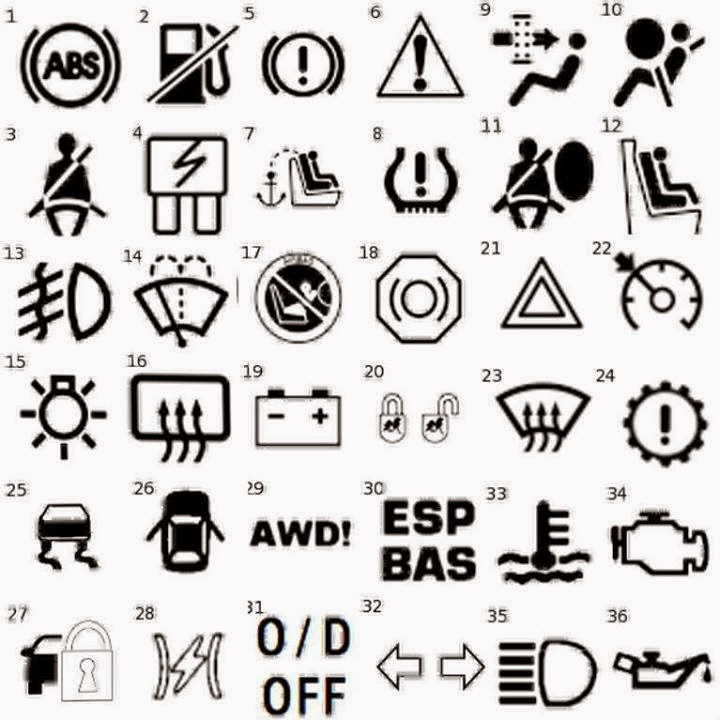
1. ABS warning light – turns on to indicate that there is a fault in the anti-lock brake system (note that this symbol is activated when the engine is started and turns off automatically after a few seconds).
2. The symbol indicates a very low fuel level.
3. Seat belt reminder, symbol remains lit as long as the engine is running and the seat belt is still unfastened.
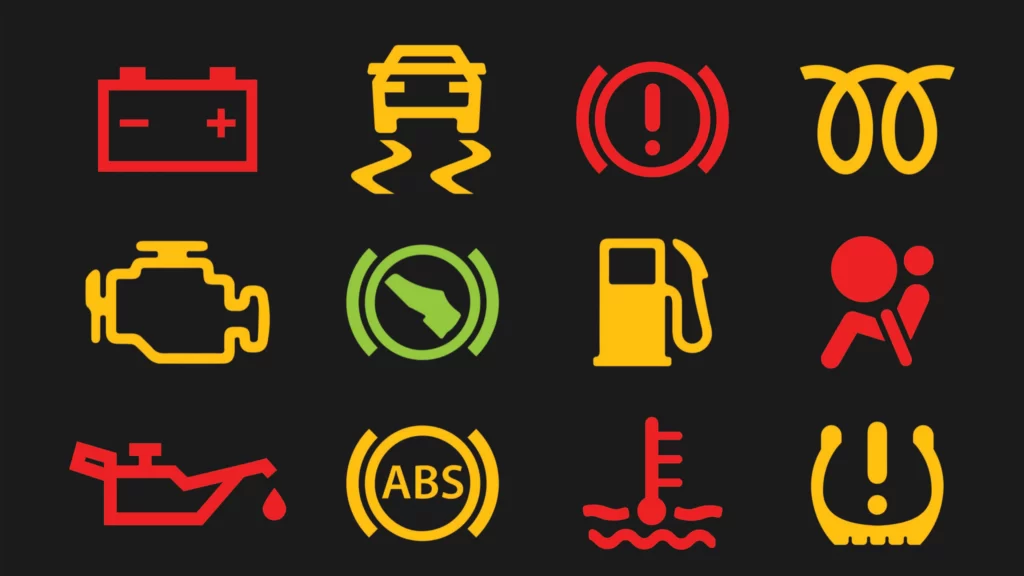
4. Warning of an electrical problem. This logo indicates that there is a problem in the car’s electrical system.
5. Brake Alert System, lights up if the ECU identifies a problem with the brake system.
6. Warning light. This symbol indicates that there is an unknown problem with your vehicle. It usually requires that you take your vehicle to the nearest service center.
7. Child seat indicator, which lights up to notify you that the child seat has been properly installed.
8. Monitor tire pressure, and it is triggered in the event of low tire pressure that can increase fuel consumption or affect driving.
9. Air filter. This light indicates that a fault has been detected in the passenger compartment air filter.
10. The front airbag, which if it lights up indicates a problem with the front airbag, and you need to go for a quick service.
11. The side airbag, which is the same as the previous description, but for the side airbag.
12. Child seat This symbol lights up to let the driver know that there may be a problem with the rear child seat, similar to Code 7 but used by other car companies.
13. Fog light indicator, which is activated and remains illuminated as long as the driver operates the front fog lights.
14. Windshield washing, which symbolizes the operation of the windshield wipers.
15. The headlight switch, which symbolizes the operation of the car’s headlights.
16. Rear window defrost, and lights up when the driver presses the rear window defrost button.
17. Child Seat Warning Similar to other child seat warning signs, it warns the driver that the child seat may be installed incorrectly.
18. Brake fluid problem, this symbol is rarely found on the dashboard, and it indicates a problem with the brake fluid.
19. Battery warning, if this light is turned on while driving, it detects a malfunction related to the battery charging system.
20. Child safety lock. If illuminated, it indicates that the child safety lock has been activated.
21. Emergency indicator, which is activated if the driver presses the emergency button once.
22. Cruise control. This light will turn on if the cruise control system is activated. Note that this symbol may vary depending on the make and model of the vehicle.
23. Windshield defrost, similar to rear window defrost.
24. Engine malfunction, and lights up in the event of a malfunction or damage to the engine, which must be serviced as soon as possible.
25. Vehicle swerve indicator, which is mostly installed in luxury cars, indicates the vehicle is deviating from its lane (which may be due to some difficult driving conditions such as driving on snow)
26. Doors open indicator, this code usually turns on as soon as the driver starts the engine and informs him that the doors (one or more) have been closed improperly.
27. Anti-theft system, installed exclusively on Ford vehicles, this symbol lights up when the Securilock anti-theft feature is activated.
28. The electronic brake control system light, which usually turns on for a short period when the driver starts the car engine, indicates a malfunction in the electronic brake control system and the rate of acceleration of the car.
29. AWD, when the four-wheel drive system is operating.
30. ESP/BAS light, similar to the ABS indicator, but installed to inform the driver of a potential problem with the vehicle’s electronic stability system.
31. The Overdrive indicator, which is illuminated when this system is operating in some cars.
32. Turn signals, which are certainly the most famous instrument on the dashboard, are activated by the driver in the event of cornering and changing the direction of the car.
33. High temperature warning light, which warns the driver of the possibility of the engine overheating and usually requires the driver to stop the car.
34. OBD indicator, which detects indications of an engine problem or a fuel leak.
35. High beam beam, which is activated if the driver turns on the high beam headlights.
36. Oil pressure warning, which is triggered if the ECU system detects an oil pressure problem, and usually advises the driver to stop the vehicle for an oil check at the nearest service center.
There are no reviews yet. Be the first one to write one.