
Brake
Test Quick check to test the presence of air in the hydraulic circuit of the brakes
1- When you press the brake pedal, you find that there is resistance to the pedal at the end of the pedal trip. In the event of pressing several quick successive times on the brake pedal, it is noted that the pedal force increases and the remaining distance of the pedal increases. This means there is air in the circuit. It is noted after a period of time the return of the pedal to its initial state.
2- Note the brake fluid in the reservoir. Open the tank cap and have the technician apply several times to the brake pedal and then hold his foot in the pressure position. Then ask the technician to abruptly lift his foot off the brake pedal (slip the foot off the pedal). In the event that a spray of brake fluid rushes to a height of more than 8 cm, this indicates the presence of air in the brake circuit.
| Warning: When performing Test No. 2, the side of the car must be covered so that the brake fluid spray does not hit the car paint and cause damage to it. |
Changing the brake fluid:
1- Pull the brake fluid from the master cylinder reservoir, then dispose of the fluid using the proper and adopted methods.
2- Fill the master cylinder reservoir with fluid from a new can of brake fluid.
3- Bleed the wheel brake unit on each wheel until a clean fluid comes out of the bleed pin.
| Warning: During the old fluid removal process, do not allow the brake fluid to empty the master cylinder reservoir. Note the fluid level and make up for the loss during the brake fluid change procedure. |
Master cylinder drip test
Excessive wear of the friction linings, mostly due to the brake pedal not fully returning to the no-brake (brake-loaded) position. This is due to the couplings of the wheel brake pistons or the brake actuator rear warning lamp switch.
If the brake pedal is not fully reversed, this means that the primary interlock will be in a position to shut off the master cylinder compensation hole. To confirm the cause of the problem
– remove the two brake lines from the master cylinder. In this case, the brake fluid should drip at a rate of 1 point per second, which is why this test is called the “master cylinder drip test.” If there is no dripping, this means that the brake pedal is preventing the master cylinder from being released from the non-brake position.
Have the assistant technician pull the brake pedal to release the brakes. If the cylinder starts to drip, this means that the problem is that the rear brake actuation warning switch, the cruise control switch, or the pedal travel stabilizer are not set. If the master cylinder remains in a non-drip state.
Partially loosen the master cylinder bolts with the servo. If the master cylinder starts to drip, this indicates the servo thrust lever is too long and needs to be adjusted. If the master cylinder remains in a non-drip state. The problem is with the master cylinder itself.
Check the brake fluid for contamination. If any engine lubricating oil, power steering oil or automatic transmission oil is used, it will cause deformation and stretching of the primary cylinder interlock, and the compensation hole will be closed. If brake fluid becomes contaminated, the cylinder must be rinsed and any rubber part used in it should be replaced.
Pressure (diff key bulb brake warning)
Pressure-Switch , Differential (Warning of Brake Switch)
The pressure differential switch is used in most cars that use a double master cylinder and was built after 1967, to warn the driver of a loss of pressure in one of the two separate brake circuits by illuminating the red warning lamp on the car’s dashboard.
The brake line from both the front and rear circuits of the master cylinder is connected to the switch so that the graphic warning light illuminates if there is a pressure difference in the two circuits as in Figure 1.
 |
| Figure 1: How the pressure difference warning lamp of the collector valve works |
A pressure breakdown in one of the two circuits will not cause a pressure breakdown in the entire hydraulic circuit. After the brake hydraulic system has been repaired and air has been bled from the circuit, applying moderate force to the brake pedal will return the piston to the center of the switch and this will turn off the warning light.
In the event that the lamp does not turn off, do the following steps:
1- Apply a light pressure to the brake
pedal 2- Momentarily open the bleed valve on the side that did not have the problem.
These steps will return the center-pressure differential piston, in cars that are not equipped with automatic piston-return springs.
Key sensitive brake fluid level
Brake Fluid Level Sensor Switch
Many master cylinders, especially in systems with two axial brake circuits, often use a brake fluid level sensor switch in the brake fluid reservoir. This sensor will illuminate the red warning light on the instrument panel if it senses a low level of brake fluid. of the types used; The float sensor or magnetic switch both shut off the circuit when the fluid level is low and the warning lamp lights up. When the master cylinder reservoir is filled with brake fluid to the required level, the warning light will turn off.
 |  |
| Figure 2: Brake fluid level switch: Magnetic switch (right), float (left) |
Diagnosing the dashboard
brake warning lamp illumination The illumination of the brake warning lamp may be due to any of the following reasons:
1. The parking brake is activated – the same warning light is used to warn the driver if the parking brake is activated.
2. Low brake fluid level. This illuminates the warning light on vehicles that have a master cylinder brake fluid level sensor switch.
3. Uneven brake pressure – The pressure differential switch is used on most cars with two front/rear brake circuits to warn the driver that there is low pressure in one of the two circuits, front or rear.
Note: Brake systems use a pressure differential switch or a low brake fluid level switch to illuminate the warning lamp, but not both.
The most likely reason for the brake warning light to illuminate is a low brake fluid level due to a leak in the brake line, wheel cylinder, saddle cylinder. Therefore, the first step in diagnosing is to find out the cause of the light bulb, and then fix the malfunction.
Step 1: Check the brake fluid level – If the brake fluid level is low, check the brake hydraulic system carefully for leaks, repair the fault if necessary.
Step Two: Disconnect the wire from the pressure differential switch – in the event that the light is still on, the malfunction is due to the brake lever switch in the on position or there is a ground connection causing the operating position or the switch wire is connected to ground.
If the warning lamp goes out after disconnecting the pressure differential switch, the fault is due to a breakdown in one of the two circuits (weak pressure in one of the two circuits or a difference of 100 kPa.
Note: Some Japanese cars operate the pickup that illuminates the brake warning light from the output terminal of the charger. In the case of a quick check of the brake system, it appears that there is no malfunction and that everything is fine, check the value of the charging voltage before continuing to check the brakes in more detail.
Adjust the valve of proportionality
Proportioning Valve Adjustment
proportionality valve which operates according to the change in height should be adjusted when installing a new valve fit instead of the damaged. Provided that it is ensured that the appropriate pressure reaches the rear brakes according to the vehicle’s load and the amount of load on the rear axle.
Procedures change from one vehicle to another, so refer to the manufacturer’s maintenance catalog for the required steps.
Diagnosis and examination of the valve proportionality
Proportioning Valve Diagnosis and Testing
A damaged proportional valve allows the oil pressure of the rear axle to increase at a rapid rate, causing the rear wheels to lock up during harsh braking. When the rear wheels are closed, the contact between the tire and the road is reduced and the car often skids. If the rear wheels are locked, make sure that the proportioning valve is working correctly. If the valve is a height sensor type, check the height of the vehicle, and adjust the operating lever.
Pressure gauges may be used to ensure proper operation. Connect an in-line meter from the master cylinder and the second to the valve output of the rear wheel. While the technician’s assistant is applying the brake pedal, note the gauge reading. Both counters must register an increase in the amount of pressure until the manifold point is reached, the counter connected to the proportional valve (rear wheel) must increase at a lower rate than the counter connected to the master cylinder.
If the above does not happen, the valve must be replaced. The same steps can be performed on the dual axle circuit, used on most front-wheel drive vehicles.
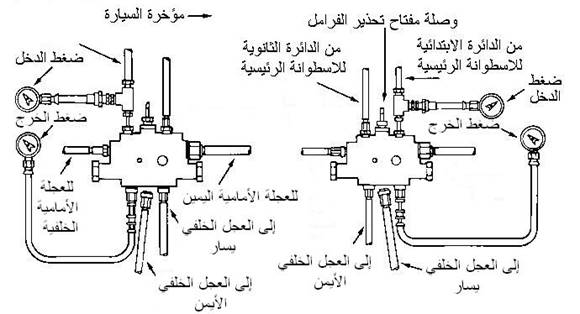 |
| Figure 3: The proportional valve test is performed using two pressure gauges. The test is repeated to read the pressure going to each rear wheel. |
Diagnosis and examination of Calibration Valve
Metering Valve Diagnosis and Testing
Note: The brake system with double brake axial circuit, such as those found in most traction vehicles do not use the front valve calibration. The calibration valve is only used in vehicles with a front/rear dual brake circuit, as is found on most rear-wheel drive vehicles.
A damaged calibration valve could be leaking brake fluid. It may cause the front wheel to brake before the rear wheel. This is very noticeable on slippery roads such as roads covered with snow and sleet. If the front wheel is locked, the vehicle cannot be steered. Check the calibration valve if either of the above occurs.
1- Leak – Look around the bottom of the calibration valve for brake fluid leaks. (Ignore the presence of moisture on the valve). The valve must be replaced if there is a leak.
2- With the increase in pressure of the front brakes, the valve shaft must move, in the absence of movement, change the valve.
The titration valve can be checked in a more accurate way by using a pressure gauge. Connect one of the gauges to the brake line from the master cylinder side before the calibration valve, and a number to the front wheel after the valve. When pressing the pedal, the two gauges must read the same reading for the pressure value, until the reading reaches from 20 to 200 kPa when the calibration valve is closed to delay the front brake. The gauge reading connected to the master cylinder should indicate an increase in the pressure reading as the brake pedal pressure increases.
When reaching a reading of 500 to 2000 kilopascals, it is noted that the reading of the two meters has become equal. In the event that the readings are not within the mentioned range, the counter must be changed.
(See Figure 4).
 |
| Figure 4: Calibration valve Lee section |
Note: Damage to either the metering valve or the proportioning valve will not cause the vehicle to skew during braking, as the metering valve controls the brakes of the two front wheels, and the proportional valve controls the brakes of the two rear wheels. Master cylinder damage also does not cause the vehicle to swerve while braking. That is why when the car swerves during braking to one side, look for problems with the wheel separately; Wheel cylinders, wheel brakes, or a problem with the steering or suspension links.
Kit and special equipment Porsche brake
kit for hand brake Basic , of Brake Hand the Tools:
– key bolt brake line Tubing Or Line Wrenches
– bleed air key Bleeder Wrenches
– repair kit brake line Tubing tools
– pliers brake of Brake Pliers
– several lift spring returns the brake Drum brake shoes tools
– Allen wrench and special bits for loosening the Allen and Torx bits saddle bolts
– Kit (clamp) for inserting the disc brake piston into the saddle C-clamps
– Wheel brake smoothening kit Brake cylinder hones
Brake System Measuring Tools: Brake System Measuring Tools
: Metal Slide (clearance gauge) feller Gauges
– micrometer to measure the disk and circuit Rotor and the drum micrometers
– shoe gauge circuit (adjust the shoes before the installation of the circuit) shoe and the drum gauge the
– scale clock (measuring not neutralization disk) the Dial Indicator
– force Da’sh scale (pedal) pedal – effort gauge the
– pressure gauge Oil (brake line pressure gauge) Hydraulic pressure gauge
Specialized Brake Tools
– Seal and Dust boot installers
– Wheel bearing service tools
– Hydraulic system tools
– Servo service kit (booster height gauge – Vacuum pump, Power brake service tools,
electrical and electronic parts testing kit:
Jumper wires
– Optical device for testing conduction and current, Test light
– Multimeter (volt-ampere)
– Ohmmeter
– Voltmeter Voltmeter
Ammeter
– waveform meters
– Scan tools
: Brake System Cleaning Tools
– Vacuum cleaning systems
– Wet cleaning systems
Brake service equipment: Brake Service Equipment
– Brake lathes
– On-car disc lathe Lathes Brake
– polishing disc surface Rotor Burnisher of Brake
– grinding circuit Grinder Drum
– grinding shoes shoe Grinders of Brake
– piston Hydraulic press of Hydraulic
– equipment bleed air pressure bleeding equipment pressure
– equipment bleeding air Baltkhalkhal Vacuum bleeding equipment
Clothes prevention
- Respiratory protection
Dynamic brake analyzer
principle of operation
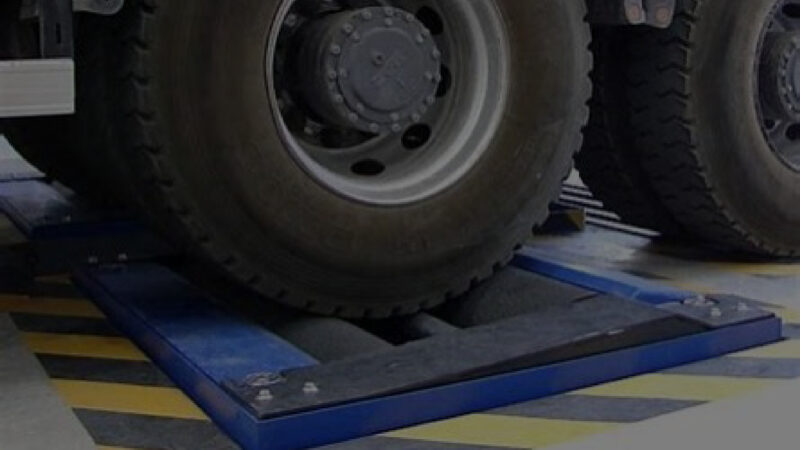
The brake force tester measures braking performance and includes two tracks, each track axle with two moving dolphins installed at ground level.
To perform the brake force test, the wheels of each axle are placed on top of the moving dolphins (3).
The electric motor (4) moves the dolphins and thus the wheels of the car.
When the brakes are applied, the driving torque (2) of the electric motor resists the braking torque (1) coming from the wheels of the vehicle.
The electric motor works to overcome the brake torque coming from the wheels of the car by increasing the power and thus maintaining its rotational speed.
An arm shall be installed at one end of it moving on an axle installed between the dolphins and the electric motor, and the other end shall have a space to measure the braking force (6) through the arm (5).
The higher the brake torque, the greater the pressure from the shifter (5) on the brake force gauge.
The force applied to the force gauge space is proportional to the braking force and transmitted through the hydraulic tube (7) to the brake force gauge (8).
The test dolphin (9) prevents the dolphin (3) from spinning when the vehicle is not on the brake force tester to prevent accidents. As shown in Figure (5).
(In some designs the braking torque created during the braking test that counteracts the direction of motion of the test dolphins is transmitted through a lever and via an inductive pickup to the digital processor unit.)
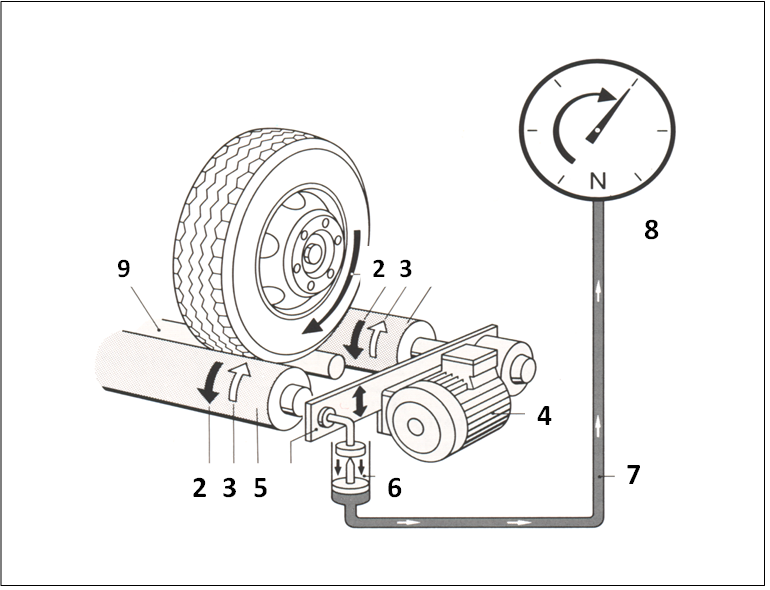 |
| Figure (5): Brake force test device |
| Section | Section | ||
| 1 | braking torque. | 6 | Oil cylinder with piston to measure braking force. |
| 2 | Commander’s determination. | 7 | Oil tubes. |
| 3 | Spinner dolphins. | 8 | Indicator to show the value of the brake force. |
| 4 | Electrical engine. | 9 | Dolphin running brake test device. |
| 5 | swing arm |
The Kinetic Brake Force Tester has a high surface friction resistance through the surface covered by the animatronic dolphins.
With this design it is possible to obtain high braking force against small loads on the wheel or axle.
Reaching the maximum braking force, the wheels begin to slip and the brakes tend to lock, and when the percentage of slip between the moving dolphins and the wheels reaches 20%, the device stops working automatically.
Instructions for testing the brake force:
Test conditions:
To reach specific values of the brakes and also to obtain other results it is important to measure the consumed brake force. For this purpose, a sensor is installed to measure the force acting on the brake pedal (the maximum force acting on the brake pedal is determined to reach the minimum braking failure according to the country’s system).
§ The device is re-calibrated upon testing.
§ Tire pressure is checked before the test is carried out.
§ The vehicle is driven on the inspection platform so that the wheels are in the middle of the spinning dolphins and the vehicle is straight.
§ The brakes must not be wet.
§ The wheels must be installed straight when the dolphins start spinning, otherwise the vehicle will swerve out of the spinning dolphins.
Brake force calculations:
The brake force of the wheels can be viewed through external indicators of the brake force device, and they are either in the form of analog or digital indicators (the calculations that take place inside the microprocessor and are expressed in numbers that appear on the screen of the tester) can be summed up as follows:
The braking force is indicated In terms of (N) for each wheel, the total braking force (Fb) can be obtained by summing the brake forces on all wheels.
The maximum resistance in percent (%) can be calculated by the following mathematical formula:
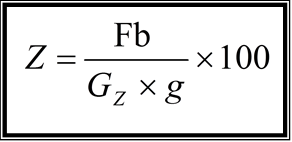 |
whereas
| Z | Maximum resistance in percentage (%). |
| Fb | The sum of the braking forces in units (N). |
| GZ | Permissible weight (total mass) of the vehicle (Kg). |
| g | 10 m/sec² The acceleration due to gravity ≈ |
Example:
Total vehicle weight (mass) GZ = 1350 (Kg)
Acceleration due to gravity g = 9.81 (m/ sec²)
Total braking forces FB = 7600 (N)
Required:
Calculate the maximum resistance in percentage (%)?
the solution: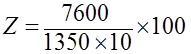
= 56.3%
Parking brake:
The braking force generated by the clamping brake (handbrake) can be added to the braking forces from the wheels. The hold brake must begin to brake during the first third of the handbrake’s upward movement and must give the lowest permissible brake deflection before reaching the end of the second third.
The differences between the braking forces obtained by the wheels on the axles are not considered dangerous because these differences are not more than 30% of the maximum value when the vehicle is fully loaded during the test.
With the difference in the braking force of the wheels, this can be attributed to many reasons, including:
1- Measurement indicators when braking increase and decrease, and it is possible that the reason for this is corrosion in the brake disc or circuit (oval).
2- When the fixing brake is tightened, the two readings are different on the indicators for the rear wheels, and this could indicate a loosening in one of the two wires of the fixing brake, or that it is stuck and needs lubrication, or that there is a layer of brake oil on the wheel that did not show an increase in the braking force.
3- Measurement indicators when braking. One of the wheels gives a high braking force as soon as it affects the brake pedal. This indicates the presence of high friction resistance between the friction linings and the circuit. The reason for this can be attributed to the fact that the two friction linings of that wheel are stuck with the circuit or that the two linings are eroded to the extent that the layer The metal of the shoe started to rub against the circuit.
There are no reviews yet. Be the first one to write one.