
Advanced systems to help the driver
Advanced driver assistance systems (ADAS)
those systems purpose of existence is to help drive the driver in driving a car. In order to increase the safety of the car mainly and the road in general. As well as the comfort of the driver and passengers, saving fuel and preserving the environment:
– In-vehicle Navigation System (Automotive Navigation System):
It is a satellite navigation system designed for use in cars. It uses the Global Positioning System (GPS) device to obtain the user’s location data on the road using the unit’s database. The unit also gives locations and indicates ways to reach places located in the path. Some modern systems receive and show road traffic information and give suggestions for alternative routes with less congestion. Through the database, locations can be obtained by address, or coordinates, as well as identifying places of public interest such as shops, restaurants, petrol stations, banks, companies, and public parking spaces.
1- ECM ENGINE CONTROL MODULE
TCM-2 ELECTRONIC TRANSMISSION CONTROL MODULE
3- ELECTRONIC CONTROL MODULE OF ABS-ECU
ANTI SKID OR ANTI LOCK BREAK SYSTEM -ELECTRONIC CONTROL UNIT
4- ECM TRACTION CONTROL UNIT
5- AUTOMATIC STABILITY CONTROL UNIT
6- AUTOMATIC CLIMATE CONTROL UNIT
7- POWER ASSISTED STEERING CONTROL UNIT
8- CENTRAL CENTRAL CONTROL SYSTEM BODY CONTROL UNIT
9 – CRUISE CONTROL UNIT
10- AUTO NAVIGATION SYSTEM
Adaptive Cruise Control (ACC):
It comes under several names according to the manufacturer such as active cruise control (ACC), intelligent cruise control, and radar control system. Adaptive or radar cruise control, or autonomous cruise control, is an optional vehicle control system that automatically adjusts the vehicle’s speed while maintaining a safe distance between the vehicle and the vehicle in front. The system works with information from a sensor installed in the car. It is a radar sensor connected to the car’s electronic control unit that slows the car and stops when necessary without driver intervention.
Collision Avoidance System (CAS):
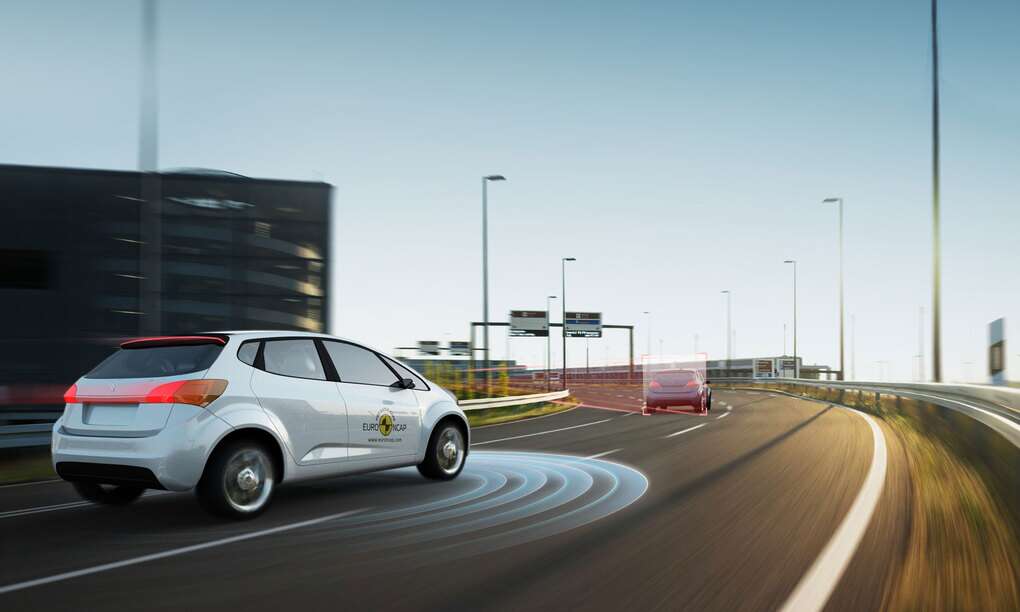
A vehicle safety system designed to reduce the extent of an accident. It has many names, it is called a pre-crash system, forward collision warning system or collision mitigating system, and it works with radar and sometimes laser and vision sensors to avoid imminent accidents. It uses the ACC pre-adaptive cruise control system. When the sensors sense that the vehicle is approaching the vehicle ahead at a high rate, the system warns the driver via an audible warning or a flashing light on the instrument panel. In the event that the driver does not respond and continues to approach the vehicle in front at the same rate, and when it senses that there is an unavoidable collision, the system will apply the brakes to reduce the force of the accident. At the same time, the system adjusts the seat belt tension, adjusts the head restraints, closes the electrically operated windows and the sliding surface to reduce the impact of the accident in the event of a collision.
Adapter speed smartphone (launch solutions / Speed Assistant Intelligent System) Intelligent Speed Adaptation, Intelligent Speed Advice or Assistance (ISA):
This system is known assistant speed intelligent, system warning speed, is based permanently monitor the speed of the vehicle speed limit the maximum allowed on the road The one who drives the car and then intervenes when it turns out that the car has exceeded that permissible limit. The system either warns the driver (passive intervention) or takes the initiative and automatically reduces the vehicle’s speed (positive intervention).
Night Vision
System : It is a system that increases the driver’s ability to see at night or in difficult weather that cannot be seen through the high lights of the car. The system uses infrared sensors to detect images of objects that are difficult to see in the absence of sufficient light for vision. The passive system uses thermal imaging machines to obtain images from the heat emitted by the body, according to its temperature. The positive system uses an infrared source to be reflected from the objects in front of the car and infrared sensors record and display it.
Adaptive Light Control (ALC):
The adaptive headlight system adjusts the intensity of the illumination emitted by the headlights to suit different driving situations. Most of these systems perform one or more of the following operations:
– Adjusts the direction of the headlights to follow the curves of the road, and this is done by collecting information from the car’s speed sensor, the steering wheel position sensor, the car’s rotation rate around its vertical axis.
Directs the beam of light at intersections according to the intention of steering the vehicle.
– The light changes from high beam to low beam automatically according to the road conditions such as rain, fog, the presence of a car in the opposite direction…. etc.
Raising and lowering the high beams Automatic Head lamp Leveling Control, the system raises the direction of the headlights beams in the following cases:
– At high speeds and automatically reduce it at slow speeds, to adapt movement inside and outside cities.
When ascending and descending an inclined road, the beam shall be lowered when ascending an inclined road and lowered than when descending an inclined road.
Changing the height of the lights when changing the distribution of loads, such as loading the car with people or gear and equipment, or while accelerating or decelerating, or traveling on roads with high and low levels. The system provides the necessary lighting to overcome these conditions. There are two types of that control, static control and dynamic control. The static system: It adjusts the distribution of loads only, as it is based on the vehicle’s tilt angle through information from the axle sensors, and it adjusts the headlights to match the vehicle’s tilt angle. Dynamic system: adjusts headlight height with changing weight as well as acceleration and deceleration
Most of these systems use an electric motor to adjust the direction of the headlights. Some systems rely on lighting other sources of lights in different places and directions, or use reflectors to direct the rays. Most of these systems have side lighting, which lights up automatically at speeds above 70 km/h, and to improve visibility near the side of the vehicle, which is important in sharp and narrow coils.
Traffic Sign Recognition (TSR): It
is a technology that makes the car recognize traffic signs on the road, such as the speed limit, pedestrian crossing, schools, train crossing, etc. This system is one of a group of advanced driver assistance systems. The system works by means of a car camera that captures images of signals where they are identified by a program on the car’s computer. The current system recognizes the signals and displays them to the driver on the dashboard to warn the driver that they must follow on that part of the road. This system can be developed so that the system shares that information with other systems in the car, such as the self- cruise control system and safety systems.
Blind Spot Detection:
The invisible area (which is translated in many Arabic books as the blind area) of the car, which is the area around the car that the driver cannot see directly when driving. The driver’s visibility is the maximum distance he can see and identify the objects around the vehicle. Visibility is determined by the weather and the car’s design, and visibility is also affected by the windshield, instrument panel, and side pillars.
The driver of the car depends on the rear view mirror, and the side mirrors to see the cars coming from behind. But there is an area on the sides of the car at the rear a little bit outside the range of view of these mirrors. It is called the invisible area. It is responsible for the hundreds of thousands of crashes that occur each year as a result of trying to change lanes.
To overcome this, radar or image sensors are used to monitor the invisible areas of the car and warn the driver when another car is in that area. It is mostly done by an audio warning or a visual warning as a yellow or red light on or near the side mirrors, these warning signals appear when a car is in that area, especially on the back of the car. There are systems that vibrate the steering wheel or the driver’s seat in the event that he is given a turn signal and there is a car coming in the invisible area on that side
Backup Warning System:
This system works by means of radar or an ultrasonic wave system. It is installed in the car from the rear for the purpose of detecting any object in the way of the movement of the car backwards. This detection system is connected to the reverse lights and only works when the vehicle is in reverse gear. And when it detects that there is an object in the path of the car behind and close to it, the system warns the driver by audible or via a lamp in the dashboard or the rearview mirror.
There are systems with a rear camera to identify and indicate the object behind the moving vehicle in reverse. The image is shown directly on a display screen or on the rear view mirror. The system recognizes both stationary and moving objects.
Driver Alertness Monitoring Driver Drowsiness Detection:
This system works to prevent accidents caused by driver drowsiness while driving. There are several of these systems in the market or in the development stage. These systems monitor the driving position and behavior of the driver and send a warning or take over driving responsibility in the event of a failure to respond. The information used and relied upon by the system in some cars comes from the Lane Departure Warning System (LDWS), which is used in the Driver Attention Tracking System. Some of these systems monitor the rate of movement of the driver’s eyelids, and other systems monitor the movement of the head (falling or drooping). Or, in systems under development, it monitors the driver’s facial expression. These devices use cameras mounted in front of the driver’s face (in the rear view mirror). Some of these systems also monitor the movement of the steering wheel and vehicle gears, to make the decision to intervene to warn and wake the driver.
Vehicular Communication Systems:
It is a communication network that connects vehicles and traffic units on the side of the road, and provides each other with information, such as safety warnings and traffic information. It is a collaborative system that can be more effective in avoiding accidents and traffic jams in a better way than trying to have each vehicle solve the problem individually. Although the system is designed for the purpose of improving safety, there are several other advantages such as introducing alternative routes to congested roads by means of real-world information exchanged. This will result in time and fuel savings that have a significant impact on the economy and the environment.
Hill Descent Control (HDC):
Also called Hill Mode Descent Control, Downhill Speed Regulation (DSR). This system allows for smooth descent control on roads and rough terrain without the driver having to apply the brakes. When the vehicle is going down an incline, the wheel lock system will control the speed of each wheel individually. It works in case of acceleration of the car without driver intervention, and accordingly the system will apply the brakes to control the speed required for descent. The cruise control system will adjust the speed to the appropriate speed. The system is deactivated when the driver depresses the fuel pedal (acceleration) or the gasoline pedal. The system is activated by the driver pressing a key at hand, and the system does not operate automatically when descending slopes.
Some cars use throttle control or the transmission system (using first or second gear) to brake the car instead of applying the brakes.
Electric Vehicle Warning Sound, Virtual Engine Sound System (VESS):
The electric vehicle warning sound is a set of sounds designed to warn pedestrians of the presence of an electric vehicle, such as a hybrid vehicle or plug-in hybrid electric vehicles (HEVs) vehicles (PHEVs), or all-electric vehicles (EVs), which travel at low speeds. Where these cars emit less noise than traditional Internal Combustion Engine (ICE) cars, which makes it difficult for pedestrians, and others to pay attention to the presence of these cars, especially at speeds less than 30 km / h, which are often inside cities, which makes Background noise covers up the little tire sound.
This sound is called the Virtual Engine Sound System (VESS), which produces a synthetic sound similar to that of conventional cars.
Blind Spot Detection:
The blind spot (translated in many Arabic books) of the car, which is the area around the car that the driver cannot see directly when driving. The driver’s visibility is the maximum distance he can see and identify the objects around the vehicle. Visibility is determined by the weather and the car’s design, and visibility is also affected by the windshield, instrument panel, and side pillars.
The driver of the car depends on the rear view mirror, and the side mirrors to see the cars coming from behind. But there is an area on the sides of the car at the rear a little bit outside the range of view of these mirrors. It is called the invisible area. It is responsible for the hundreds of thousands of crashes that occur each year as a result of trying to change lanes.
To overcome this, radar or image sensors are used to monitor the invisible areas of the car and warn the driver when another car is in that area. It is mostly done by an audio warning or a visual warning as a yellow or red light on or near the side mirrors, these warning signals appear when a car is in that area, especially on the back of the car. There are systems that vibrate the steering wheel or the driver’s seat in case he is given a turn signal and there is a car coming in the invisible area on that side.
Automatic Parking: It
is an automatic system for parking the car, parking the car parallel, perpendicular, or inclined to the road. The purpose of using this system in the car is to increase the driver’s comfort and not to harm the body of the car or parked cars, while ensuring that it is parked in the place properly so that it is not exposed to collision. The parking maneuver is carried out by coordinated control between steering angle and speed, which takes into account the actual situation of the place to ensure that there is no collision with cars in the available space.
Pedestrian Protection System:
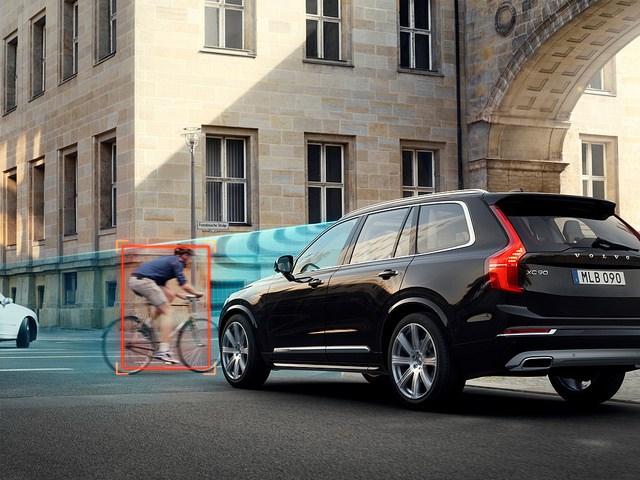
At speeds less than 25 km/h (inside the city), the system works through sensors and cameras and the use of the computer to identify pedestrians and the direction of their movement and alert the driver by voice to crossing or the possibility of their presence in front of the car.
Intelligent Speed Adaptation, Intelligent Speed Advice or Assistance (ISA):
This system is known as the Intelligent Speed Assistant and the Speed Warning System, which constantly monitors the vehicle speed and the maximum permissible speed limit on The road in which the car is traveling and then intervenes when it is found that the car has exceeded that permissible limit. The system either warns the driver (passive intervention) or takes the initiative and automatically reduces the vehicle’s speed (positive intervention).
Lane Change Assistant (LCA), Blind Spot Detection:
This system continuously monitors the rear blind spots on both sides of the vehicle using two radars located at the two rear edges of the vehicle. The system warns the driver if a lane change is unsafe at that moment.
Lane Departure Warning System (LDWS):
A system to warn the driver when the vehicle departs from the lane in which it is traveling (unless the turn signal is activated in the exit direction) . The purpose of the system is to reduce accidents caused by collisions due to driver error, inattention, distraction, and drowsiness.
Hybrid systems: The
components of the system layout:
In these systems, the hydraulic pump is controlled by an electric motor (not by a belt mounted on a car engine).
(It is noted that the efficiency of the electric motor or generator is less than the mechanical power transmission), but the result of the control behavior is the less consumed power.
There is more than one method for controlling the work of this system as follows:
Driving mode responsive method:
In this system, the control group consists of a vehicle speed sensor, steering angle sensor, an electronic control unit, as well as a pump driven by an electric motor.
Driving conditions are known if they are within residential areas, main roads or highways, and the pump is controlled to achieve the required assistance according to different operating conditions.
Steering wheel speed responsive method:
This system, like the previous system, consists of a car speed sensor, a steering angle sensor, an electronic control unit, and a pump driven by an electric motor.
Here the work of the pump is controlled according to the speed of the steering angle in the car’s speed, so the rotational speed of the electric motor and the pump increases when the car is stopped or traveling at slow speeds, which corresponds to the presence of large steering angles and at high speeds, so the oil flow rate increases.
The various systems of the hydraulic steering system
Fundamentals of electronic control system:
Electronic control of the power steering group undoubtedly improves the performance and response of the car to the steering in addition to providing some of the power needed to operate the power steering group. This is done through a control group that reduces the effort spent in steering. For example, an electronic control system can be added to the hydraulic servo steering system, and the steering system can also be converted to be electrical and electronic units.
The main objective of adding electronic control to the steering system is to reduce the effort required for steering when traveling at slow speeds, and on the contrary, when traveling at high speeds, it must give an appropriate reaction to the driver, facilitating the process of controlling at high speeds and increasing the safety of the car.
To achieve these goals, the car’s speed sensors must be added, which measures the car’s speed, so that the characteristics of the control group are always changed according to the car’s speed and very softly.
In fact, the car’s use of electronic control systems in the hydraulic servo and the complete electronic control of the electric servo system reduces the power required to operate the system as well as improves performance. The requirements of the electronic control in the servo steering system can be summarized as follows:
1. Reducing the effort spent in the steering process.
2. The smoothness of the steering group operation.
3. Conducting feedback steering forces to sense the road.
4. Damping shocks that may arise when one of the wheels (kickback) collides with a stone, for example
5. Provides the consumed power.
6. To switch to the normal mechanical system in the event of any failure in the servo groups or the motor
(failsafe system).
Electronically controlled servo steering systems can be classified according to the nature of the basic system installation, which are either hydraulic, hybrid or electric systems, and we will explain each type in detail. Sometimes these systems, which are commercially produced for cars that are already on the market, are called a variable-assist steering system, and they indicate the change of the driver’s auxiliary forces with speed and operating conditions.
3 – 2- Hydraulic System:-
We mean here by the hydraulic system of the servo with the addition of electronic control.
This system differs from the traditional hydraulic system in the control group, which is added, as mentioned above, to improve performance and reduce the power consumed in the control group. guidance.
3 – 2 – 1 System components: –
This system, in addition to the components of a conventional system, consists of a linear solenoid value valve, a vehicle speed sensor, and some auxiliary electronic parts. The opening of the linear valve is controlled based on an electronic signal from the car speed sensor, and thus the pressure and disposal of the servo pump (oil pump) is controlled. Here, the assistance forces change smoothly with the change in the speed of the car. With a large servo force, and on the contrary, at high speed, the effort exerted by the driver is greater (in fact, the effort required to steer decreases with increasing speed) and there is more than one method to control this system.
There are no reviews yet. Be the first one to write one.