

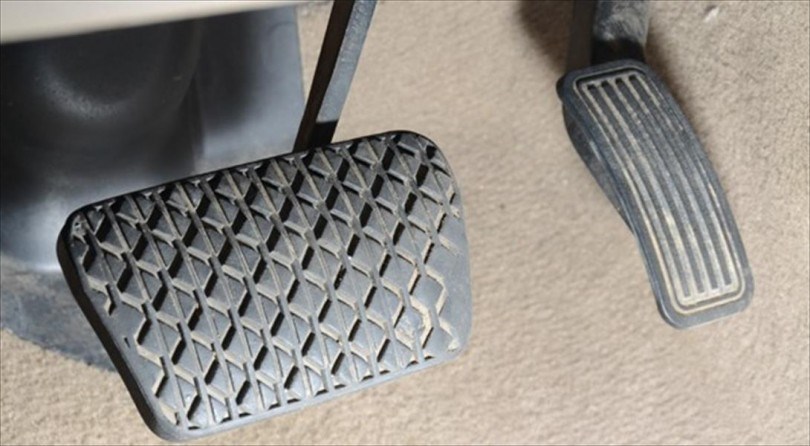
Most of the car accidents on the road are due to sudden malfunctions in the car brakes and the lack of control of the motorists on their nerves when they are surprised by the failure of the brakes to stop the car in time. Do the brakes differ from one car to another? How are the car brakes maintained and sudden faults fixed? The car maintenance engineer says that the brakes are one of the most important parts of the car because they are the basis of safety factors on the road, so every car driver is advised before moving in the car to ensure the efficiency and safety of the brakes by inspecting:
First: The daily inspection of the brake oil tank (brake oil) and increase it so that the air does not enter the oil cycle and affect the brakes and their efficiency.
Second: Make sure that the brake pads are not corroded or that there are no cracks and cracks.
Third: Periodic examination of brake hoses in service and maintenance centers and inspection of the bolsters for work and the public master, where the blockage of the hoses causes the dam oil not to reach the master of the calf and prevents it from doing its job and stopping when necessary, in addition to the car’s inclination and deviation to one of the directions right and left according to the blockage of the hose when Depress the brake pedal.
Fourth: Ensure that the oil does not leak from any part of the brake cycle.
Fifth: The need to periodically check the tires of the car and make sure that they are in good condition, that they are all of the same size and that their surface is smooth and has no scratches so as not to help the lint erode quickly.
The maintenance engineer adds that there are two types of brake or friction systems:
The first type: Disc brakes, where the friction is between a rotating disc that is installed on the work axis and a rough surface (brake pads).
The second types: cylinder brakes (drums), where friction occurs between the inner surface of the cylinder (the drum) and a rough surface (clogs).
And that in the case of car braking, the friction surfaces are pressed to the surface of the disc or cylinder with great force to maximize the friction force. The brakes and a group of tubes and pistons to transmit force) and in the hydraulic system, the master completes the process of transferring the force to the different wheels. The process of braking the car requires a compressive force between the friction surfaces much greater than the force with which the driver presses the brake pedal. Zoom by controlling the diameters of the pistons.
As for the parking brake, there are three steps to ensure its safety:
First: Inspect the rear brake pads every 10,000 km, and it will be changed if it is corroded.
Second: When raising the handbrake stick, it must be raised by an amount ranging between 5 to 7 ticks.
Third: In case of oversight and driving with the hand brake stick raised, it must be inspected and made sure of its validity and the replacement of the damaged one.
With regard to malfunctions that affect the brakes, they are:
Irregular brake performance due to brake oil leakage, or brake disc instability. It can be repaired by making linings for all brakes and reconnecting the disc in a proper way.
The brakes sticking and not doing their job due to the emergence of the nails and rivets used in installing the brake linings and the failure to rinse the ends of the brakes after re-lining. Here, the springs must be replaced or the brakes re-lining properly.
Poor performance of the brakes due to the erosion of the linings, and the treatment is to replace the linings.
The pedal contacts the ground despite its adjustment due to a malfunction of the brake master cylinder and its treatment is to clean the valve or replace it.
Not stopping the car until after pressing the pedal several times, due to the presence of air in the brake circuit and the blockage or damage of the valve. The treatment is to drain the cycle, replace the spring, or clean the valve.
Overheating of the brakes while driving due to the pressure of the return springs or insufficient clearance between the brake pedal and the brake master cylinder, and here it is necessary to change the springs or reset the pedal.
A loud annoying sound from the brakes due to the presence of dirt in the brakes or the lack of fastening of the lining screws.
Self-ignition of the brakes, due to the mixing of brake fluid with another fluid, and here the rubber parts are replaced, cleaned with alcohol, and filled with brake fluid again.
Absence of the brake pedal, and this is due to the presence of air in the brake pedal, and its treatment is by loosening the air, and sometimes you feel the presence of clear resistance and constriction when pressing the brake pedal, and this means the need for a “servo” quickly, which is the unit responsible for facilitating the passage of the wire connected to the brake.
There are no reviews yet. Be the first one to write one.