

Unit planetary gears (astronomical)
Planetary Gear the Set (Simple Epicyclic Gear Train)
unit installation planetary gears:
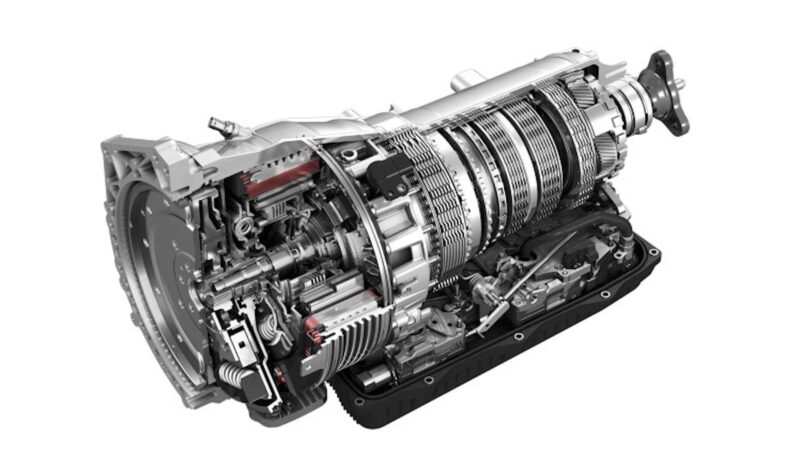
All funds transmissions self (Alootomatk) rely on our modular planetary gears for power transmission and zoom torque connecting to the management hub. The combined gear train includes at least two simple planetary gears, to obtain a large number of reduction ratios to provide optimum vehicle performance. Planetary gear units may be used with a manual gearbox, where they are fitted with a gearbox output to give an overdrive, a positive reduction ratio of less than 1.
The simple unit consists of three parts, the sun gear, and a carrier mounted on it. A set of planetary pinion gears, as well as a ring with an internal gear called the ring gear or annulus.
The position of the sun gear is in the middle of the unit. The teeth of the sun gear may be straight or beveled outer teeth, and the sun gear meshes with the planetary gears.
Planetary gears are a group of small gears mounted on a rack made of cast iron, aluminum or sheet steel, and with a shaft for each planetary gear. These planetary gears rotate around the shaft through a pomegranate bly abri. The rack and planetary gears are one part. The planetary gears surround the center of the sun gear, and the rack and shafts of the planetary gears rotate about the sun gear’s rotation axis. In this case the planetary gears rotate around themselves (the carrier shafts) and at the same time rotate around the center of the solar gear (as is the case for the planets in the solar system, which is the basis for the name of this unit).
The planetary gear is surrounded on the outside by the ring gear, which is the largest part of the unit. The inner ring gear teeth mesh with the planetary gear teeth.
 |  |
How the planetary unit works:
All parts of the simple unit, the sun gear, the bracket, the annular gear, can rotate (turn around the center) or their rotation can be prevented.
To transmit power through the unit one must prevent rotation of one part of the unit, or connect two parts of the unit together to form one body. It can be used that part of the unit as the input element and the output element, and one of the parts must be held, fixed, stationary and stopped rotating, and the third part is an output element or management component (input).
The increase in torque or speed when the unit works on any of the parts in the unit is the drive element and which one is the fixed part.
In order to remember the amount of the reduction ratio and the work of the group, the following is taken into account:
– In the event that the carrier is the input component, then the reduction ratio is positive less than 1. This increases the speed and reduces the torque.
– In the event that the bearing is the output element, the reduction ratio is greater than 1. This reduces speed and increases torque.
– In the event that the holder is the fixed part, the reduction ratio will be negative. This makes the output rotation the opposite of the input rotation.
Controlling the action of the planetary unit: To
control the action of the unit, a brake (outer tape) is used to fix one part of the unit and a clutch (multi-disc friction) to connect two parts of the unit together. The brake and clutch work is controlled automatically (automatically) to obtain the required reduction ratios according to the optimal operating conditions of the car.
How to calculate the reduction ratio of a planetary unit:
The reduction ratio of a planetary gear unit can be calculated using the following equation:
 |  Where: s = number of teeth of the sun gear a = number of teeth of the ring gear NS = rotational speed of the sun gear (r/min) NA = rotational speed of the ring gear (r/min) NC = rotational speed of the carrier (r/min) |
* The number of teeth of the planetary gears (p) and the speed of rotation of the planetary gears about its axis (NP) are not included in the equation.
In the case of installing any of the unit gears (*), its rotational speed will be zero, i.e. (N* = 0)
– the case of installing the solar gear, and the bearing (C) is the inward element and the annular gear (A) is the outward element. The previous equation becomes as follows:
 |  |
 | Therefore, the percentage of reduction (IG) for this arrangement (A) is as follows: |
Similarly, the rest of the ratios can be obtained as follows:
| Fixed gear | A | S | C | |||
| Input | S | C | A | C | A | S |
| Output | C | S | C | A | S | A |
| ranking |  |  |  |  |  |  |
| ig . reduction ratio |  |  |  |  |  |  |
| Limits of Reduction Rates | 2.5 ≤ ig ≤ 5 | 0.2 ≤ ig ≤ 0.4 | 1.25 ≤ ig ≤1.67 | 0.6 ≤ ig ≤ 0.8 | – 0.25 ≤ ig≤ – 0.67 | – 4≤ ig≤ – 1.5 |
| speed reduction | Speed Zoom | speed reduction | Speed Zoom | reverse speed | reverse speed | |
| Figure number in the program * | Fig. 3 | Fig. 6 | Fig. 5 | Fig. 2 | Fig. 4 | Fig. 1 |
| Notes | Biggest Sale 1 | 2 . discount | over speed 5 | rear R |
# The velocity of the outgoing component is equal to the velocity of the incoming component divided by the reduction ratio.
To calculate the output speed of the unit in different cases, you can refer to the Excel program to calculate the reduction and output speed of a planetary gear unit. It is required to enter the number of teeth of the sun gear (s), the number of teeth of the annular gear (a), the inlet gear (A, C or S), the incoming gear (C, S or A), as well as the speed of the inlet gear (Ninput). The program will calculate the number of teeth of the planetary gear (p) (will not be included in the calculations), the indication of the fixed gear (S, A or C), and calculate the value of the unit reduction ratio (ig) based on this order, and calculate the speed of the output element (Noutput). With an indication of the unit form in the given order.
* Excel program to calculate the reduction ratio of a planetary gear unit .
The following table shows the working states of the simple unit of planetary gears, as it shows the speed, torque and direction of rotation.
| sun gear | pregnant | annular gear | the speed | determination | output direction | |
| 1 | Enter | went out | installed | Biggest Sale | He increases | like income |
| 2 | installed | went out | Enter | less discount | He increases | like income |
| 3 | went out | Enter | installed | Biggest increase | say | like income |
| 4 | installed | Enter | went out | less increase | say | like income |
| 5 | Enter | installed | went out | discount | He increases | Income Reverse |
| 6 | went out | installed | Enter | more | say | Income Reverse |
| 7 | If any two parts are joined together, the velocity and direction are the same as the input. 1:1 reduction ratio (direct transfer) | |||||
| 8 | If any of the parts are not installed or two parts are connected together, no output (state of neutrality) can be obtained. |
Gears Planetary
Planetary (Epicyclic) Gear Train
uses Transmission Self (automatic) several units of planetary gears connected respectively to obtain the reduction ratio required to provide the optimal performance of the car. When several units of planetary gears are grouped together, it is called a gear train. During this group, the output of the first unit is the income of the second unit, and the total reduction ratio is the product of the reduction ratio of the first unit multiplied by the reduction rate of the second unit. The work of the units is controlled by a brake (outer tape) to install the parts, and a multi-disc clutch to connect two parts of the unit together.
 |  |
Where:
K1 = Clutch No. 1
K2 = Clutch No. 2
B1 = Brake No. 1
B2 = Brake No. 2
N = Move Neutral
1 = First move
2 = Second move
3 = Third shift (direct)
R = Rear shift
There are no reviews yet. Be the first one to write one.