

Definition of wheel locking: It
is the lack of rotation of the wheel during braking and its creep forward (the wheel is moving forward without turning).
The reasons for closing the wheels:
cause the wheels to close to be:
the braking force acting on the wheel > the force of the wheel’s grip with the road
> the weight of the wheel x the coefficient of adhesion between the wheel and the road and
this is achieved either: by
increasing the amount of force on the right side of the previous equation or by decreasing the amount of force On the left side of the equation is as follows:
High braking force (strong pressure on braking)
Low wheel weight (distribution of loads / weight transferred from rear to front during braking)
Low friction coefficient (presence of freezing water / oil / sand) on the road or condition Bad for the surface of the frame.
Wheel locking problems: Wheel
locking: increasing the stopping distance (when blocking occurs and on a certain type of road).
Locking the front wheels: losing the ability to steer the car.
Locking the rear wheels: the car has lost balance (the car is rotating around its vertical axis).
* Closing the rear wheels is more dangerous, as closing the front wheels and losing the ability to steer can be overcome by reducing or increasing the pressure on the brakes, or closing the rear wheels and loss of balance that cannot be overcome by reducing or increasing the pressure on the brakes (when the car starts to spin around its axis, it will continue in it and can not be controlled by the driver).
Wheel sealing treatment methods:
There are several methods for wheel sealing treatment
A – When designing the brakes, the brakes are designed to give a force proportional to the weight on the wheel. In the case of front-engine cars, the weight ratio on the front axle is in the range of 60-70%, and therefore the front brakes are designed so that their force is in the range of 60-70% of the total brake force of the car. This is by choosing the wheel cylinder spaces or the type and method of working the wheel brakes, or both.
b- Reducing the braking force on the axle in the event of a lack of load on the axle (in the case of freight cars, the weight on the rear axle and the vehicle being loaded is 50-60%, and the weight on it is in the range of 20-30% when not loaded – or in the case of a different load as a result of the weight transferred from the rear to the front during braking or both). This is done by using brake fluid pressure control valves (controlling braking force where brake force = brake pressure x wheel cylinder area). There are different types of these valves as follows:
Calibration valve (mounted on the front axle in the event that the front brakes are disc and the rear brake).
Fit valve (mounted on the rear axle).
Combined valve with a calibration valve for the front brake and a proportioning valve for the rear brake.
c- Use of ABS system.
ABS
System Facts about the system:
The ABS system does not increase brake force.
The antilock system prevents the wheels from locking up and does not prevent accidents.
The wheel lock system operates only when the wheels are subject to locking.
The wheel locking system works on the traditional brake system of the car (brake fluid / wheel cylinders / wheel brakes).
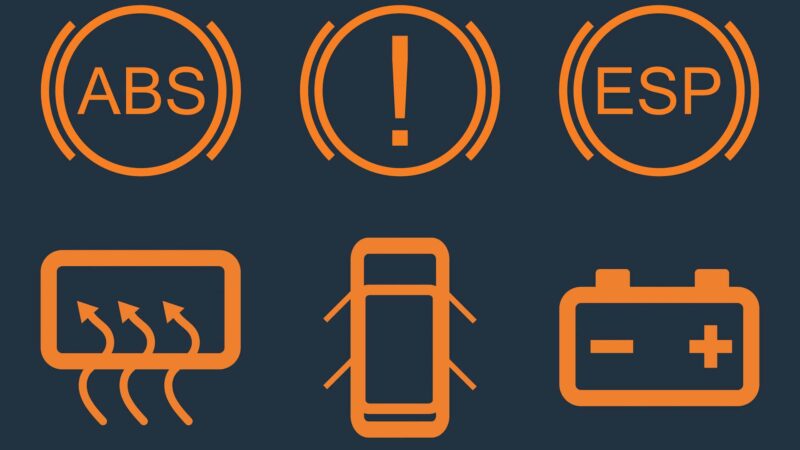
When the system malfunctions, the system failure warning lamp lights up and the brake system continues to operate normally, but without the antilock system.
The system reduces the stopping distance only if it is working (the wheels are closed) on asphalt roads, but does not reduce the stopping distance in general at all times and on all types of roads.
The different types of system:
In most cars, the system works on all wheels, but in trucks and larger cars, the system often works on the rear wheels only.
How the anti-lock system works:
When the wheels close, the system controls the pressure of the brake fluid, reduces its value so that the locking condition does not occur, then increases the pressure again to continue the braking process, and the system repeats this process (reducing or raising the pressure and then increasing the pressure) until the closing condition ends, ( The rate of repetition of this process is in the range of 20-30 times per second and continues until the completion of the closing state and then leaves the work of the traditional brake system in the car to complete the braking).
* The driver in cars that are not equipped with an anti-locking wheel system can be similar to the working condition of the anti-locking wheel system by, instead of pressing hard on the brake and continuously (which may lead to locking the wheels) by applying pressure on the brake pedal and raising the pressure with repeating this several times . But the difference will be as follows:
– The rate of repetition of this process by the driver will be 3-4 times per second maximum, not 20-30 times per second as the anti-lock wheels system.
This operation by the driver will affect all wheels, but the wheel lock system applies it only to the wheel that is prone to locking. Which maintains the braking force on the car.
The tire anti-locking system performs this process at the highest value of the friction coefficient between the tire and the road, which changes with the amount of tire slip, which increases the benefit of the braking force and reduces the stopping distance.
Parts of the wheel anti-locking system:
The system consists of the following parts:
Wheel speed sensors.
Electronic Control Unit (ECU)
Hydraulic Control Unit.
System failure warning lamp (The ABS Warning Lamp).
The function of the parts of the system:
as the system works only when the wheels are closed and continues to operate until the completion of the closed state; The system must know when the shutdown occurs and when it ends. Since the condition of the wheels being closed means the wheel does not rotate, the system will depend on observing the difference in wheel rotation speed to identify the beginning and end of the closed condition. This is done by
Wheel rotation speed sensor. The sensor sends voltage signals (pulses) whose frequency increases with the speed of rotation of the wheel and its frequency decreases with the decrease in the speed of rotation of the wheel. Here, the system must be provided with a part that receives that signal and understands its contents, and this is done through the electronic unit of the system that receives the signal, analyzes it and compares it with the closed state stored inside the unit. The unit receives the signal, analyzes it and compares it at a high rate several times per second and over the life of the car. The electronic unit remains in this way until the shutdown state of the signal received from the wheel matches the state stored in the unit. Here the unit sends a signal to the hydraulic control unit, which controls the brake line pressure via electro-hydraulic valves in most cases. The hydraulic control unit reduces and increases the brake pressure at a high frequency. During that period, the electronic control unit continues in the process of following up the condition of the wheels’ closing and when signals arrive that do not match after analyzing the closing condition, the electronic unit sends a signal to the electronic unit to stop controlling the pressure. It remains for the system to make sure that these parts are working properly, as it fears that with time a malfunction will occur in these parts and it is only discovered when the system is needed, and that will be too late. Therefore, one of the requirements for the work of the device is that it detects its working status every time the driver runs the car. In the event of a malfunction, the system then disconnects the system from work and notifies the driver of this so that he takes care while driving that his car has the brake system working, but without the anti-lock wheel system, as well as notifying him so that he can do the necessary work to detect and repair the system.
Parts work:
•
Wheel speed sensor – The wheel speed sensor is installed on the wheels or the differential gear speed input of the rear wheels or the gearbox output in some cars.
– The wheel sensor sends signals (pulses) to the electronic unit whose frequency increases and decreases with the increase and decrease of the car’s speed in order.
Electronic control unit
– to be installed in a safe place of the car away from places most vulnerable to injury during accidents or places near heat or magnetic fields.
– The electronic control unit receives the signal of the wheel sensors and analyzes it and compares it with the closed state stored in it.
– In the event that the analysis of the wheel signals showed that a lock-up is about to occur, it sends an electrical signal to the hydraulic control unit by operating the electro-hydraulic control valve of the wheel that is subject to closing to work in controlling the pressure of that wheel.
– The system continues to receive and analyze the signals of the wheel sensors, including the wheel that is subject to closure.
– The electronic unit detects the work of the system and makes sure that it works 100% every time the driver drives the car.
– In the event of any system malfunction or malfunction, the unit disconnects the system from the car’s brake system and stops its work.
– If the system is disconnected from the vehicle’s brake system, the unit sends an electrical signal to illuminate the brake failure warning lamp
Hydraulic control unit
The hydraulic control unit is connected to the vehicle’s hydraulic brake circuit.
It receives the signal from the electronic control unit.
Turn on the electro-hydraulic valve until it receives a signal to stop the valve from the electronic unit.
A warning lamp that the anti-locking wheels system is not working
– lights up when the vehicle is started.
It receives a signal from the electronic control unit and turns off if there is no malfunction, but in the event of a system malfunction, it remains lit.
There are no reviews yet. Be the first one to write one.