
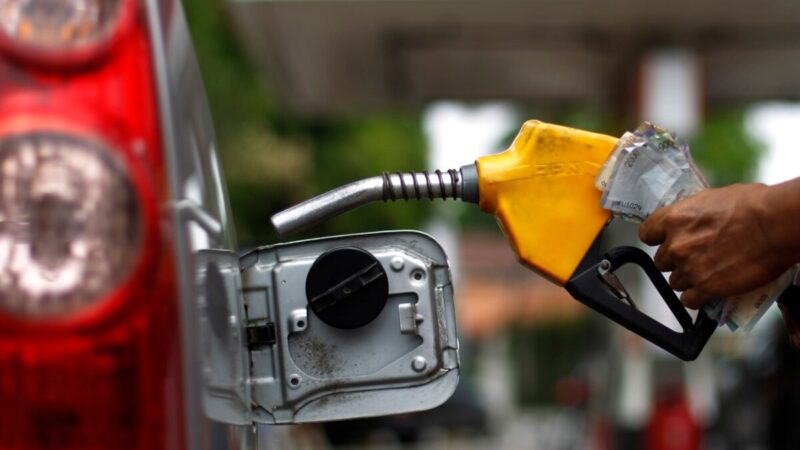

Useful information to save car fuel
There are many things that you can do to save fuel consumption and thus save money in your pocket and at the same time help the country’s economy as well as protect the environment from pollution damage.
Car maintenance and care:
By making your car in good technical condition through constant maintenance, this leads to fuel savings (for example, a damaged spark plug will inevitably lead to increased fuel consumption). Make sure the air and fuel filter is clean, and put a new one when needed. Placing a new oxygen sensor may save 15% fuel consumption, proper engine tuning (spark advance, valve clearance adjustment, feeder) increases engine efficiency and reduces fuel use. Do not forget to check the tire inflation pressure according to the stipulated value. A tire with the correct pressure saves fuel consumption by 6%. Adjusting the calf angles saves 10%. Promise yourself not to use the car as a storage, get rid of the things that you do not need and in the trunk of the car, they only add additional weight to the car, as each 100 kilograms increase leads to a reduction of fuel consumption by 0.5 kilometers per liter. Also, the use of a load net above the car without the need for it leads to an increase in the weight of the car in addition to an increase in air resistance, especially at high speeds, which doubles the fuel consumption. The use of wide tires leads to increased rolling resistance and increased fuel consumption.
Proper driving of a vehicle:
The correct way of driving leads to savings in fuel consumption. Rapid acceleration saves 20% compared to aggressive driving. As well as applying the brake suddenly and quickly, and the subsequent constant change in speed. Excess speed leads to an increase in fuel consumption, so driving a car at a speed of 90 km / h saves 15% compared to driving a car at a speed of 105 km / h. Using the navigation system in modern cars to reach the required places will save a lot of time and fuel. You can also save on fuel by not running the car on an empty load for a long time. Re-managing the car consumes less energy than continuing to run it on an empty load in cases where the children are waiting in front of the school, for example. Eliminate the use of the air conditioner in the car when it is not urgently needed. Driving in low gear for a long time, it is recommended to use the over-speed gear when traveling on open roads.
Planning before you get in the car:
Make a plan in advance before using the car, collecting a number of trips in one trip instead of several trips, each starting from home, and then planning to implement the shortest path between them. This will save a lot of fuel and time. Using the participation system to transport children to school, go to work, or go to gatherings and events, a two-person car saves about 50% of two people, each with a car. Try to take your rides at off-road times or on non-congested roads.
Weather Influence:
Driving the car upwind (wind at 30 km/h) increases fuel consumption by 6%. Also, the use of sloped roads (climbing a mountain, for example), the 7% slope of the road leads to 25% more fuel consumption compared to the flat road. Driving on unpaved roads consumes more fuel.
Alternative transportation:
Use other options such as walking, cycling, car sharing, public transportation, and leaving the car in front of the house. Walking for short distances travel saves fuel and is especially beneficial for health and fitness.
Planning when buying a new car:
When planning to buy a new car, compare the fuel consumption rate of the different cars under comparison, and take into account that the large car, the large engine, the SUV, and many additional options lead to an increase in the weight of the car and reduce fuel efficiency. And issued through specialized websites and bulletins a statement of the most fuel-efficient cars.
There are no reviews yet. Be the first one to write one.