


Although car modification is a matter of tastes, we believe that you cannot sacrifice the performance and efficiency of your car for the sake of appearance, we will show you five car modifications that weaken the performance of your car
1. Tilt the frame inward. Negative Camber
This is probably one of my favorite adjustments, because even after the facts and facts are presented to people they are not convinced; Let’s look at some data. The figure below is from Carol Smith’s Tune to Win book.

Perhaps the coefficient of friction between the tires and the ground is the most important characteristic of the tire, so
we see that the largest coefficient of friction is between negative one and negative 2, that is, only a few miles, but when it is less than -2, the friction coefficient is affected by a lot, which affects the braking force of the car
Conclusion, if you can easily and clearly notice the negative in the tires, they are excessively inclined, as it will lead to uneven wear and uneven heating of the tires on the road.
2. Exposing tires
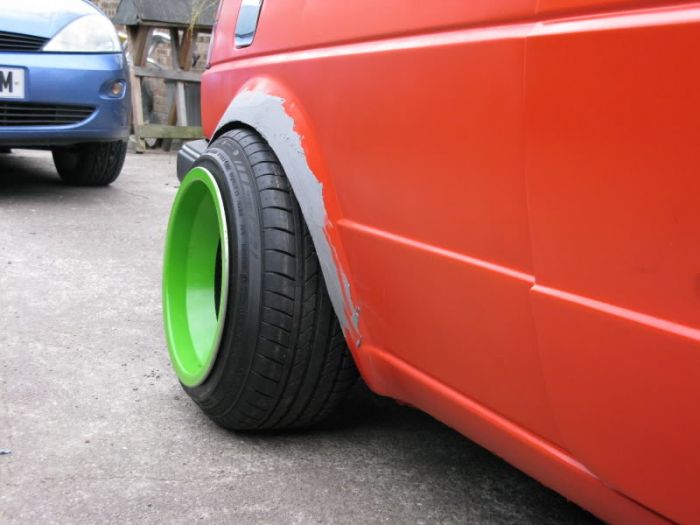
Unfortunately, exposing the tires too much reduces the performance of the suspension system and increases fuel consumption and increases the weight of the tire, which drains more energy to rotate
3- Solid or sporty Stiff Springs
Heavy-duty zippers may be necessary in some cases, but that doesn’t necessarily make them best for everyone. Cars used in motorsports tend to be stiffer than regular cars due to several reasons: they are lower to the ground and so body movement must be restricted; The aerodynamics are optimal for the height of the car and the use of solid springs helps to maintain this height, in addition to the fact that the roads prepared for racing are smooth and very smooth, which does not affect the car’s vibration.
But on normal roads, there are many bumps (air bumps), so you need flexible springs to increase the adhesion of the tire to the road, as the assistant can move down a longer distance when the car body rises away from the road, while the solid springs will see the tire fly in the air away from the earth. Using a thicker spring helps reduce body roll in the coils at high speeds and allows the car to be lowered, but comes at the cost of traction in unstable situations (bumps, faults, potholes, etc.). Do not believe me? See the video above.
4- crash the car


Although it is fairly simple, it will not make your car a superstar on the road as you will install a rigid suspension system to match this very little height.
The problem with this modification is that you find the car vibrating with a strong force on every bump or hole, which makes the trip tiring, in addition to the same defects as the previous point. If you insist on this modification, you should use the gas-only suspension system. It should be noted that some countries prohibit this amendment by law.
5- Drilled Rotor
Boreholes have a purpose, but the benefits don’t outweigh the negatives.
These drills increase the resistance with the brake pads, which raises the temperature dramatically, which can cause the brake pads to break.
The most important benefit of these perforated drums is the leakage of water or impurities resulting from the corrosion of the brake pads so that the lining sticks to the drums as much as possible.
There are no reviews yet. Be the first one to write one.