
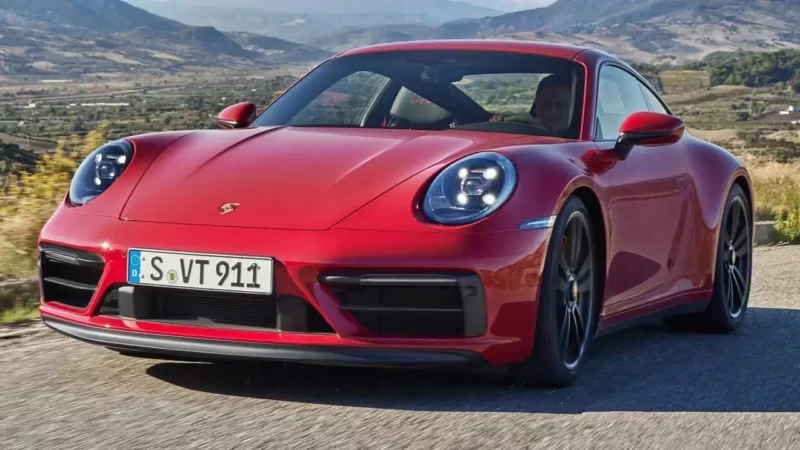
From generation to generation, the perfect sports Porsche 911 has been developed. But it kept its iconic design.
The Porsche 911 is undoubtedly one of the most iconic sports cars of all time. For decades, the model has kept the same design cues with its iconic round headlights, fastback roof and rear engine, with upgrades and improvements along the way. This makes it easy to recognize the Porsche 911 no matter when it was produced or where you’re going.


Maintaining design is not easily achievable. Especially in light of the continued change of regulations and new requirements for the automotive markets, which made the industry change directions several times throughout history. But the Porsche 911 remained the same, its first model is more similar to its last model , only some lines changed here and there, but the car remained timeless in the same way.
The little sports car didn’t falter once. The designers simply found ways to work with the rules, without changing them, to keep the Porsche looking and feeling attractive. This does not mean that the car has not undergone changes over the years, because they have modernized it. The car has evolved greatly since the first car appeared in 1948. In general, the first generation of the Porsche 911 paved the way for the car to rise to the top of the sports car category .
The Porsche 911 was introduced in September 1964 and evolved into the Porsche 992 we see from production plants today. Let’s dive a little deeper into the evolution of the iconic Porsche 911 and see how it has changed over the years.
Beginning and Success 1964-1989: 911

The first Porsche 911 hit the streets at the end of 1964. The first generation lasted until 1989, 26 years in the same form and generation. When it first appeared, it was branded as the Porsche 901 but was soon renamed the Porsche 911 because Peugeot argued that it had the right to all car assignment numbers that had a zero in the middle of the three digits. Instead of changing the name of their French cars, Porsche renamed the entire line.
The Porsche 911 has undergone major changes throughout this series of cars. It had the largest engine size that was placed in the rear of the car. Its first engine was a 2.0-liter flat-six. The engine went through more changes than the car itself, and the latest generation engine was a 3.2-liter, horizontally opposed six-cylinder, with upgrades to the fuel and ignition control components.
1975-1989: 930
In the late 1960s Porsche began toying with the idea of adding a turbocharger to the 911, and after experimenting with the cars they built for the racetrack. They began development of the turbocharged engine in 1972 and began production for the 1975 model year. The new car was simply called the 911 Turbo, but internally it was called the Porsche 930.
And to stabilize the car after increasing power and torque, many improvements were made to the suspension system, brakes were improved for the better, with a stronger gearbox, and to keep the engine cool, a rear spoiler was attached to the back, which helped create downforce to keep the car on the ground. The rear tires were also widened to improve traction, so the automaker had to widen the rear fenders to accommodate the larger tires.
1989-1994: 964

The Porsche 911 was formed in its second generation, and it witnessed fundamental changes, and 83% of it was updated, while preserving the classic exterior style that gave the car its uniqueness. The Porsche 964 was the new generation of the Porsche 911, and the sub-name was used to ensure that the different generations were not confused. The second generation engine was placed in the rear of the car in the Flat-six model.
The Porsche 964 was the generation that brought about two major changes. It was the first Porsche 911 with an optional all-wheel drive system, offered as standard in the Carrera 4. It was the first car to be offered with a Tiptronic automatic transmission. Sync is a big upgrade to comment. The torsion bars were replaced with shock absorbers and coil springs. These additions improved the car’s performance, a significant improvement over the iconic Porsche 911.
1995-1998: 993
According to Porsche designers, the 993 has been completely redesigned from the ground up, including the engine, and retains only about 20% of any original parts. The exterior design was changed for the first time, while retaining the basic body structure to preserve the unique styling that made the Porsche 911 so famous. But the fender wheels have been hollowed out further, the body panels have been modified, the fenders have been smoothed, and the retractable rear spoiler has been enlarged.
The 3.6-liter flat-six engine remained standard throughout the model years, paired with a 6-speed transmission as standard equipment for the first time. But the biggest change in the Porsche 911 was the suspension. Engineers focused on the suspension to improve the car’s handling and ride. The Porsche 993 sat on a light-alloy subframe, the alloy suspension linking directly to the chassis. This made it more stable than its predecessor, and made for a quieter ride inside the cab.
1999-2004: 996

Times were changing and Porsche found itself in some financial trouble. The engineers realized they had to get their car back on top, so some profound changes had to be made. The first was the potential of flat-six engines, which needed a redesign. To get back on the right track, Porsche engineers decided to cooperate with Toyota, which was the leading Japanese automaker at the time.

The 996 was the first time the car had been completely redesigned since ’64. The only parts taken from the 993 were the suspension parts, which had just been upgraded for the previous year, and they kept the six-speed transmission and transmission as standard equipment. Everything changed with another, and the result was “the car of the new millennium”. The Porsche 996 was also the first car to use a water-cooled engine. The many changes contributed to presenting a better version than all previous generations.
2005-2012: 997

The redesign of the Porsche 997 generation of the 911 began in 1999. Again the design changes were minor, but more suited to the newer styles expected by consumers around the world. The rear bodywork has been widened to allow for larger tires and a more stable ride. The main change for the 997 was the headlights. And Porsche returned to the oval headlights, like the ones used in the 996 model.

Starting in 2009, the 997 went through another upgrade. This car became known as the second generation Porsche 997 within the production lines. It came with a PDK transmission, an updated infotainment center, a new exhaust system, a modified suspension system, and some minor modifications to the headlights and front bumper. But the biggest change was moving the engine back a bit to improve weight distribution, and adding direct fuel injection to it.
2012-2019: Model 991


The Porsche 991 is the seventh generation of the Porsche 911, once again reimagined. For this series of sports cars, the wheelbase was widened, and the tail end increased, making the 991 larger than the previous 997. Of course, aluminum has contributed to reducing the overall weight of the car. And this generation of the Porsche 911 received a mid-course refresh.
From 2011 to 2016, it was equipped with a 3.4-liter direct-injection boxer engine, with two options for a six- or seven-speed transmission. The second half of the series received an all-new 3.0-litre flat-six engine with a pair of turbochargers, which was standard on all models, marking the first time in Porsche history that all models had twin turbines.
2019-2022: 992
In an effort to keep things fresh, the Porsche 992 has gone through a few other changes. The rear wheels were widened as standard, as were the rear bumper and new exhaust tips. The suspension received MacPherson struts at the front, and a multi-link suspension at the rear. The car has also been widened again to deliver better performance, and the body panels are now made of aluminium.

The inline-six engine in the last generation Porsche 911 was one of three options. The first is a twin-turbocharged 3.0-liter flat-six. the second a 3.7-liter twin-turbocharged, and the final option was a 4.0-liter naturally aspirated six. All of them came with a seven- or eight-speed transmission. The infotainment system is getting bigger and better with more new technology.
992 models also featured driver assistance, collision detection, and acoustic sensors to adjust stability controls according to road conditions. In short, it embraced everything you would expect from a modern car, plus everything you need in a high-performance sports car.
Final thoughts
Nothing can compare to the iconic Porsche 911 when it comes to sports cars. When thinking of a sports car, Porsche is always the first thing that comes to mind, it has been the perfect sports car for a long time. Over the years, the car may have received some changes, and may have gone through some modifications to the exterior design, but it has kept the same body shape, which is why it is easy to identify.
The Porsche 911 has come a long way in its evolutionary chain. Technology has increased speed and performance, in addition to raising the level of safety. It is equipped with safety technology that makes it a safe bet for anyone. Porsche has continued to remain on top of sports cars, and it will continue to do so as long as people want a performance sports car with distinctive flair.
There are no reviews yet. Be the first one to write one.