
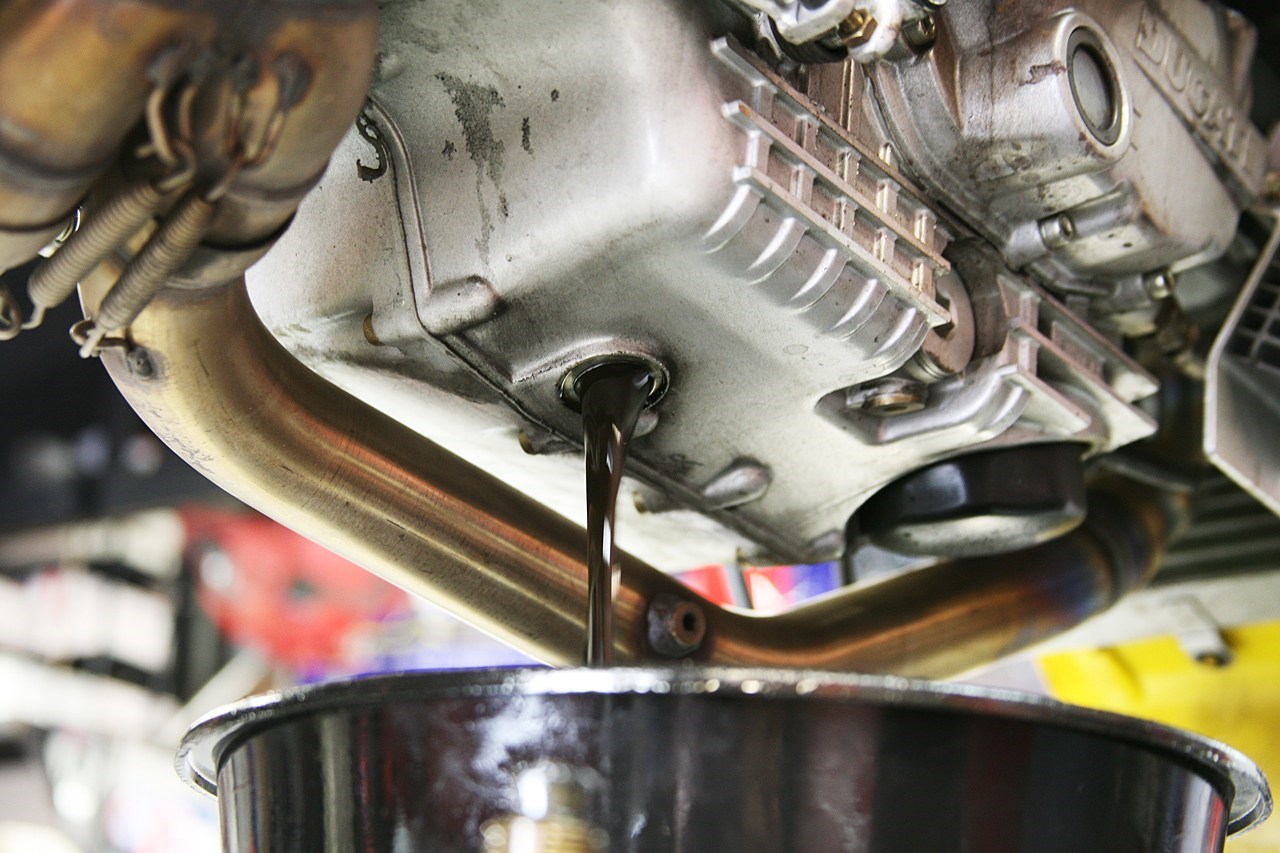
Sump, (US: oil pan), known as the crankcase.
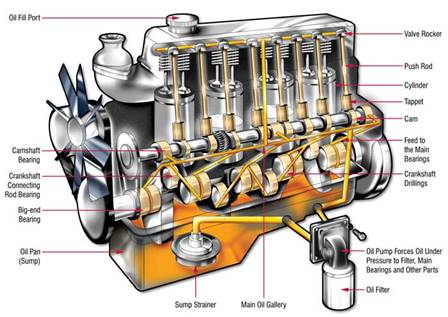
Engine parts are lubricated and cooled by motor oil that circulates through the engine, feeding the various bearings and moving parts, and then descends by gravity, to the oil sump (crankcase). A wet sump is the oil sump found in most passenger car and truck engines. The oil pump collects oil from the sump and pumps it back through the engine.
Wet / wet pelvis Wet sump:
pelvic system wet wet sump is designed to control the lubricating oil for the engines of piston piston engines which uses the attachment column tray crankcase as a reservoir built with the engine oil, which unlike the external tank or secondary user in the design of the dry dock dry the Sump , at least depth .
Piston engines are lubricated by oil that is pumped to various bearings, and which is allowed to drain by gravity to the bottom. In most production cars and motorcycles that use a wet sump system, the oil is collected in a 3 to 10 liter (0.66 to 2.20 US gal; 0.79 to 2.64 US gal) sump at the bottom of the engine, known as the crankcase, which is drawn by the pump. and pushed it back through the filter into the bearings, and so on in a continuous cycle.
The wet basin has a simple design, uses a single pump and has no external tank. Since the oil assembly is internal, there is no need for hoses or tubes connecting the engine to the external tank, which and the connections are prone to leakage. The internal pump is usually difficult to change, but it depends on the design of the motor.
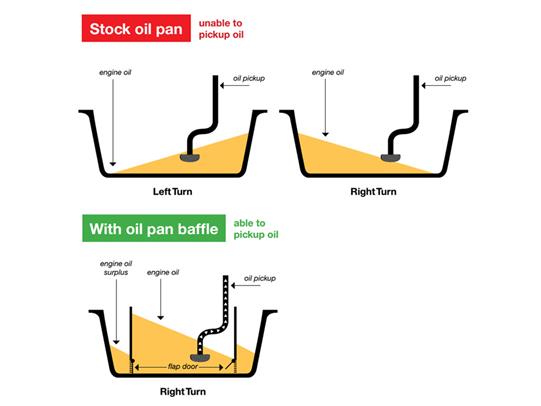
Wet sump design can be a cause of a problem in a racing car, as the g force created when the driver enters a curve causes the oil in the sump to swing away from the pump intake area, resulting in a momentary no oil in the system (fired It must lack oil starvation, which leads to engine damage. However, this problem does not occur on motorcycles, since the bike tends to the inside of the curve and the oil does not move to the side and away from the pump. However, motorcycles usually benefit from dry sump lubrication, as this allows the engine to be mounted lower on the bike; And allows the additional oil tank to get better cooling.
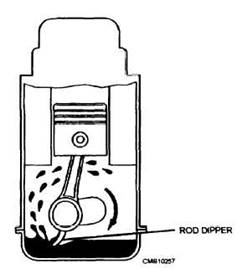
In early stationary engines, a small scoop on the crankshaft or connecting rods was used to help lubricate the cylinders by splashing. As with many small engines such as those used in lawnmowers, a slinger pedal is used to do the same job.
Dry sump: A
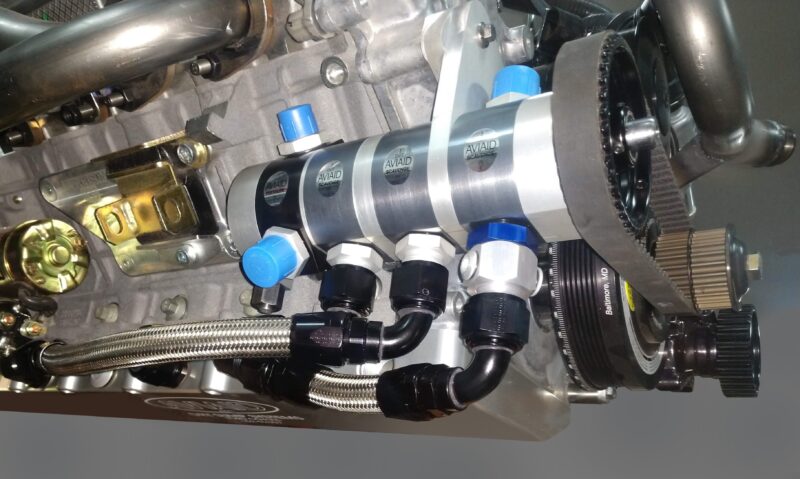
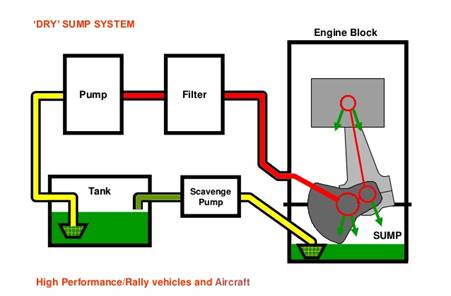
dry sump is a method of engine oil control for internal combustion engines with four-stroke and large two-stroke engines that use additional pumps and a secondary reservoir for oil, as compared to a conventional wet sump system, which uses One main sump under the motor and one pump. The dry sump can also be constructed with a single vacuum pump that creates positive pressure and negative pressure to draw and push oil to and from the engine. A dry sump engine needs a pressure relief valve to regulate the negative pressure inside the engine, so that the internal seals are not inverted.
In a dry sump, the oil still drips to the base of the engine, but rather than collecting it in a sump as an oil tank, it drips into a much shallow sump, where one or more scavenge pumps draw the oil and transfer it to an external tank, where it is cooled and disposed of air bubbles doing. Then a pressure pump draws oil from the external tank and sends it and circulates it through the engine. Often, in dry sump designs, the suction pump and the pressure pump are placed on a single shaft, thus ensuring that a single pulley at the front of the system can operate as many pumps as the engine design requirements. In practice, it is common to have an intake pump for each section of the crankcase. In the case of V-type engines, there is an additional intake pump to remove the valve gear oil. Thus, an 8V8 engine has four intake pumps and one pressure pump in the pump group. 
Wet ponds compared to dry
ponds: Wet ponds:
- A high engine position is needed in the car to provide clearance between the ground and the suspension, and thus results in a higher center of gravity of the car (lower poise).
- Difficulty cooling the oil.
- Store and handle with a limited amount of oil.
- The possibility of a momentary oil starvation in the system, which may result from the oil rushing to the side of the tank (more likely with high speed in tight corners, and a low level of fluid in the tank), which leads to the entry of air instead of oil to the lubricating areas of the engine (metal movement on metal). without lubrication).
- Streamlined design, fewer parts and connections, lower cost and potential for leaks.
Dry docks:
- Small oil sump under the engine (reduced engine dimensions and weight).
- Allows the engine to be installed lower in the car, and thus leads to a lower center of gravity of the car (better balance).
- It is not prone to the problem of momentary oil loss in the system, which may occur in engines with a wet sump.
- A larger volume of oil can be used, due to the presence of an additional tank outside the engine.
- Low oil temperature, better cooling (more oil, away from engine heat).
- More complex connections, higher cost, possibility of external leakage.
wet oil sump:
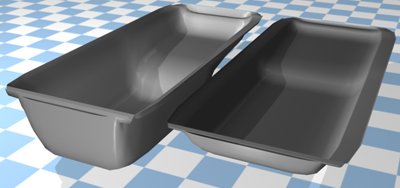
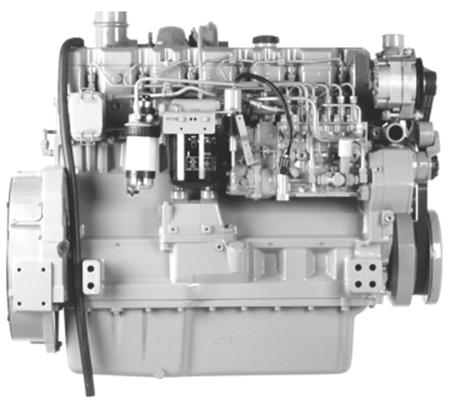
Almost all passenger cars, trucks and sports cars use what is known as a wet sump system. Looking at the figure we can see the oil sump in the lowest part of the engine. In a wet sump/crankcase system, excess oil goes down the sump after passing through the engine parts, then the pump draws oil from the reservoir and pumps it back to the top of the engine. Wet pans are less expensive to manufacture and maintain, and make oil level detection easy for the average driver. But it has disadvantages that appear during operation in the case of shifting and high braking, which can lead to oil rushing around the sump. This may result in the oil not covering the oil pump intake tube, causing the oil not to reach the upper engine parts, or it may lead to the crankshaft being flooded with oil, which is bad. To overcome these problems, barriers are installed inside the wet pans to greatly prevent the movement of oil inside them, some are installed as an additional accessory (aftermarket). 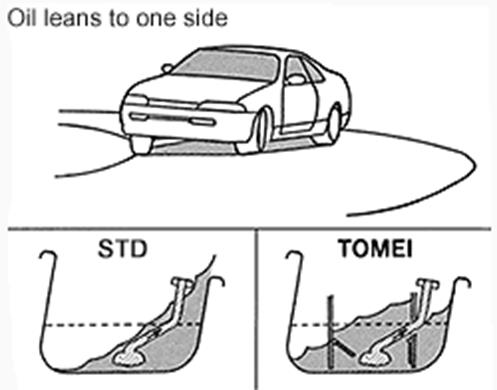
Dry oil sump:
When it comes to motor racing, a simply wet tank has a lot of drawbacks. To overcome these shortcomings, most racing cars usually use dry sump oil. As the name implies, the engine oil sump is dry – never filled with oil. In a wet sump system, the tank must be large enough to hold all the oil in the engine when the engine is turned off. In a dry sump system, this requirement does not exist and therefore the sump can be much smaller. A smaller sump means the engine is lower, so the engine can be mounted a bit lower in the car, which in turn lowers the car’s center of gravity and makes it easier to drive. This can be done by using a dry sump system that uses an external oil reservoir or tank, and two oil pumps (a two-pump system) or a single multi-stage pump. In a double pump system, One of the pumps works as in a wet sump system (distributes the oil to the top of the engine, but here it draws the oil from the tank instead of the sump). The second pump collects oil from the sump and returns it to the tank. In a single pump system, one pump has three or four stages. It has several operating circuits through the same pump that increases oil pressure and draws oil from the sump. The advantages of dry-docks for motorsports became apparent upon examination of the design, as the engine could be mounted lower on the car’s chassis (due to the low height of the sumps). The pumps are usually not driven by crankshaft belts so there is no loss of power to run them. The separate tank can be of any size and is installed anywhere in the vehicle (usually in a low position to lower the center of gravity). There is no oil rush in the sump (lateral thrust) and therefore there is no possibility of damage to the crankshaft bearings from no oil coming into them momentarily. For all these reasons, Dry ponds are safer and more reliable than their wet pond counterparts. And if they are really that much better, why don’t you find them in used commercial cars? The answer lies in the increased weight, complexity, and cost of using more and larger pumps, and a separate tank with all the high pressure oil lines and pipelines used in the system. For teams involved in the race, this is not the case, but for passenger car manufacturers this kind of complexity and cost are the cornerstones.
There are no reviews yet. Be the first one to write one.