

Classification of cars allows placing each car within its category to facilitate comparison with other similar cars correctly. However, the existing classifications are not standardized, which causes many differences, whether between manufacturers or countries. The origin of this difference is due to the fact that not all types of cars are common in all countries, and on the other hand, the name of a car can vary by region.
Broadly speaking, there is one set of classifications widely used in North America, and another set somewhat understood in English contexts in Europe.
Microcar
This class of cars can be described as the boundary between a car and a motorcycle. These vehicles have a small engine volume under 1.0 liter. Usually with only two seats for passengers. Some have three wheels, while the majority have four.
This breed became popular in post-war Europe. For its appearance, he called it a second bubble car.” The most recent example is the Smart Fortwo.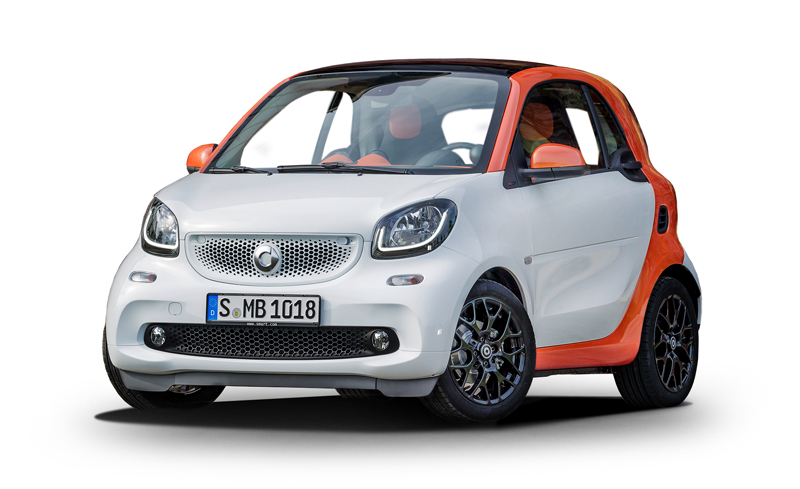
City car City
car (English: City car) are small cars intended for use in urban areas, unlike the micro-car, the city car is characterized by greater speed and capacity, and theoretically safer to protect passengers in different environments. In Japan, city cars are called K-cars. Kei cars pair a small car size with a limited engine size: the maximum engine size is 660 cm3 and the length of the car must be under 3400 mm.
Examples of Ki cars:
Daihatsu Mira (Cure or Charad in some export markets)
Honda Win
Suzuki Alto
Examples of city cars:
Fiat Panda
Ford Ka
Tata Nano
Small car
This is a rating known as Supermini car in Europe, Subcompact car in North America. The compact car has three, four or five doors and is designed for four comfortable seats. The hatchback is currently small, with a length of approximately 3900 mm, while the saloon and estate are about 4200 mm long.
In Europe, the first small car was the 1957 Fiat 500 and the 1959 Austin Mini. Today, the compact car or Supermini is some of the best selling cars in Europe.
Supermini examples:
Ford Fiesta,
Fiat Punto,
Volkswagen Polo
A small family car / car compact
car small family ( in English: Small family car) or compact car ( in English: Compact car) due to the longer sedan and hatchback cars Alastaat similar size. About 4250 mm in length in the case of hatchbacks and 4500 mm in the case of saloon and estate cars. The compact car makes room for five adults and usually has an engine between 1.4 and 2.2 liters. It is the most popular car in most developed countries.
Examples of small family cars, hatchbacks/compact cars:
Ford Focus
Toyota Corolla
Mitsubishi Lancer
This class is equivalent to the EuroNCAP “small family car” class. In Australia, it is generally referred to as a small and medium-sized car.
Large family car / car mid – sized
car large family (Large family car) or medium – sized car (Mid-size car) has room for five adults and a larger view. Its engines are more powerful than those of a small family car or small car. It features a six-cylinder which is more common than it is in smaller cars. Car sizes vary from region to region. In Europe, large family cars are rarely longer than 4,700 mm, while in North America, the Middle East and Australia they may well exceed 4,800 mm.
Examples of large family cars / mid-size cars:
Ford Mondeo
Citroen C5
Toyota Camry
This class corresponds to the EuroNCAP “large family car” category. It is known in Australia as a mid-size car.
Big
car Full-size car is a term used in most of North America, the Middle East and Australia, where it refers to the largest sedan on the market. Large cars may be much longer than the 4900 mm wide cockpit.
Examples of full-size cars:
Chrysler 300 / Dodge Charger,
Ford Crown, Victoria,
Toyota Avalon
Executive Compact Car / Luxury
Cars Compact luxury cars are the equivalent of large and small family cars. Powerful with six or eight-cylinder engines, but a smaller cabin and trunk than in other “non-luxury” cars. The reason is the need to accommodate a large engine.
Examples of compact executive cars/luxury cars (entry level):
BMW 3-Series
Lexus IS
Mercedes C-Class
This class is equivalent to the EuroNCAP “big family car” category.
Executive car / luxury car (mid-level)
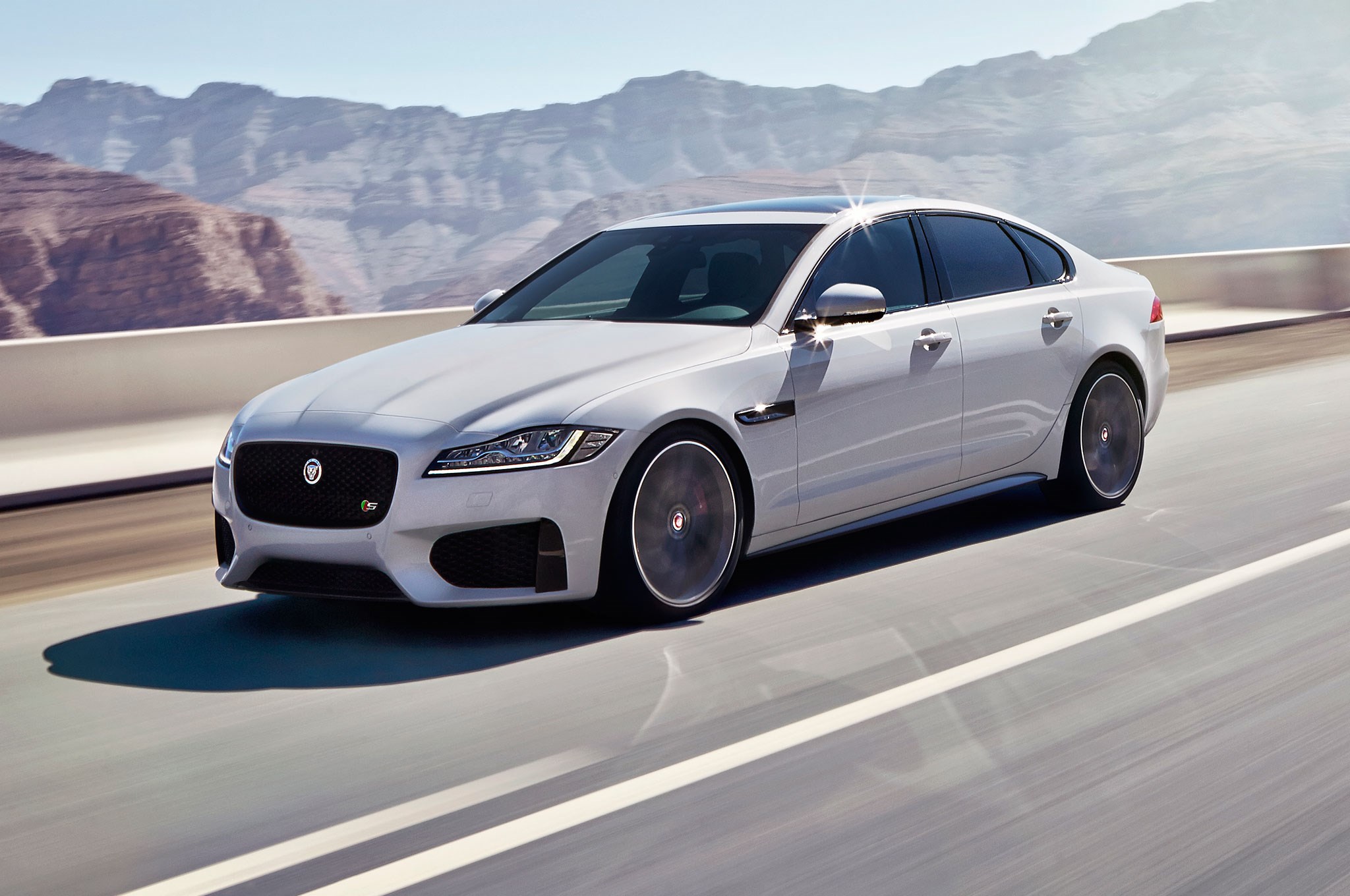
Executive cars or luxury cars are cars that are larger than the large family car / mid-size car and the compact executive car / luxury car (entry level). They are usually spacious, powerful and luxurious, which makes them more expensive than saloon cars.
Examples of Executive Cars / Luxury Cars:
Audi A6,
Jaguar XF,
Mercedes-Benz E-Class
This class is equivalent to the EuroNCAP “Executive Car” category.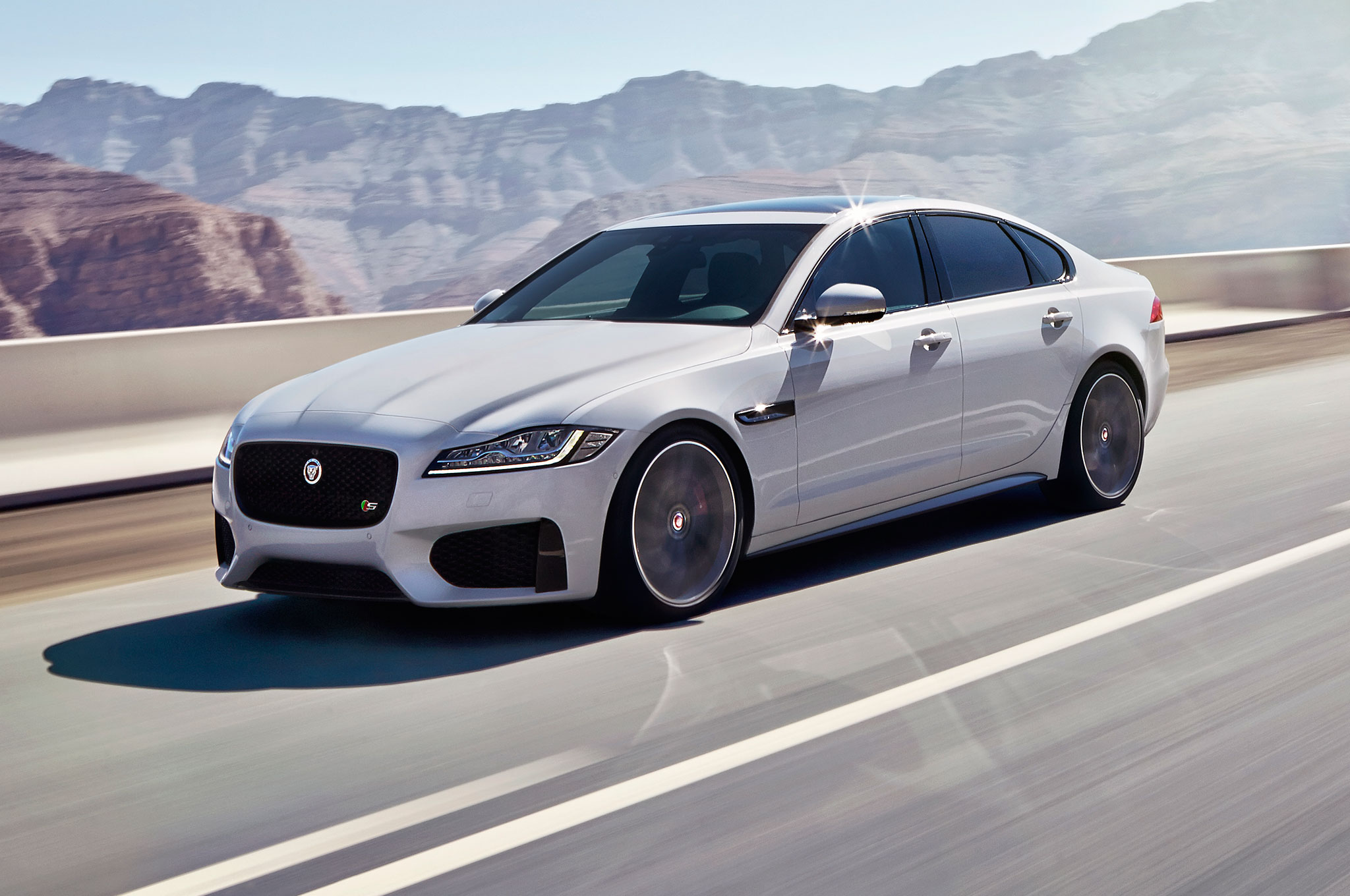
Luxury
vehicles are usually four-door saloons, but are more powerful thanks to the eight or twelve-cylinder engines and equipment than the smaller luxury models.
Examples of large luxury cars:
BMW 7 Series
Lexus LS
Mercedes-Benz S-Class
This class is equivalent to the EuroNCAP “Executive Car” category.
Compact
Sports A Sport compact is a small high-performance vehicle, usually in hatchback form, in superminis or small family car standards with improved performance and design. Very popular in Europe, the first car was the Volkswagen Golf GTI. In North America, saloons or coupes are often sold instead of hatchbacks.
Sport Compact Examples:
Dodge SRT-4
Mitsubishi Lancer Evolution
Citroen Saxo Vter
Honda Civic R
Volkswagen Golf GTI
Sports saloons/sports sedans
are high-performance versions of saloon cars. Sometimes they are approved for production as sports cars like regular saloon cars, with four or five seats.
Examples of sports saloons / sports sedans:
BMW M5
Dodge Charger
SRTL8 Ford Mondeo ST200
Sports
Car A compact and lightweight car that combines performance and stability. Often inspired by racing cars or derived from a real racing car.
Examples of sports cars:
Chevrolet Corvette
, MGT ,
Porsche
Super cars
super car (or Supercar) is a high – performance cars, very expensive and luxurious, and exceptional speed. Supercars usually contain the latest cutting edge technology, and are often assembled manually. It may also be a vehicle to bring attention to the vehicle brand, its manufacturer or parent group.
Supercar examples:
Bugatti Veyron,
Lamborghini, Murcielago,
Porsche Carrera GT
Muscle cars are
a term referring to high-performance cars with a powerful engine, manufactured mostly in the USA and Australia.
Examples of American muscle cars:
Chevrolet Camaro,
Ford Mustang,
Dodge Challenger,
Dodge Charger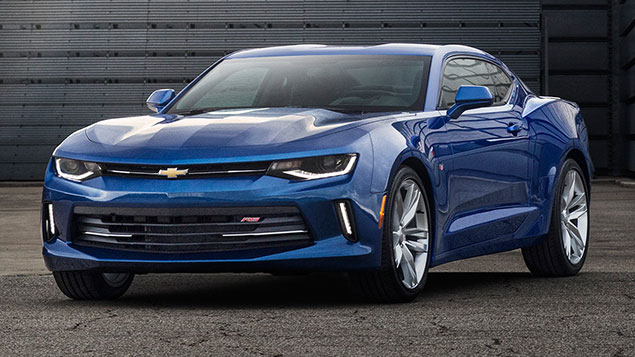
Convertible A
convertible or convertible is a vehicle that has the roof open or closed. Also known as Cabriolet or Roadster.
Examples of convertible cars:
Honda S2000,
Volkswagen Eos,
Volvo C70
Off-road vehicle Off-
road vehicles, or “off-road vehicles” and sometimes referred to as SUVs, “fours of fours”, or 4×
4s.Examples of
Toyota Land Cruiser
Nissan Patrol
Sports car utility
sports car utility ( in English: Sport utility vehicle) As.ao.vi are SUVs proper off-road. It is often characterized by high ground, and a box-like body design.
Examples of SUVs:
Audi Q7
Land Rover Discovery
Jeep Grand Cherokee
This class is equivalent to the EuroNCAP ‘Large Off-Road Vehicle’ category.
Crossover SUV A
crossover or CUV short for the word (crossover utility vehicle) is one of the vehicle classification categories, which are vehicles built on a car platform and combine to varying degrees the characteristics and specifications of a sports utility vehicle ( SUV) and from a passenger car, especially station wagons or hatchbacks.
The cars of the CV class have the following characteristics over the cars of the SUV class: CV
cars are usually lighter in weight than the SUV cars, which gives more efficient fuel consumption.[1]
The SUV is lower than the surface of the earth, so it is safer and handles the road better.
Many of the cars in the SUV category are economical cars, so their manufacturing cost is lower.
Examples:
Hyundai Tucson,
Kia Sportage,
Peugeot 3008,
Subaru XV
SUV is
a sport utility vehicle known by the acronym SUV from the phrase Sport utility vehicle. It is a class of cars built on the chassis of a light truck. It is usually an SUV type for its off-road ability. This acronym does not include all SUVs. This acronym can stand for some SUVs and pickups, since there is room to carry passengers such as a minibus or a large sedan. Because some light trucks are often considered sports utility vehicles, they are subject to two laws in the United States, the Energy Policy and Conservation Fuel Economy Act, and the Clean Air Emissions Act.
This term is not used in all countries, and outside North America where “off-road vehicle”, “four-wheel drive” or “four out of four” (short for “4WD” or “4×4”) or simply as the brand name is used to describe
Vehicles such as “Jeep” or “Land Rover” are more common examples of crossover SUVs:
Audi Quattro A6
Chevrolet Equinox
Toyota RAV4
This class is equivalent to the “mini off-road vehicle” category in EuroNCAP.
Multi-purpose
vehicle A multi-purpose vehicle (MPV), abbreviated MPV, is a class of vehicles that resemble long estate cars. Large ones can accommodate eight passengers, in addition to a larger load than hatchback or estate cars.
Citroen Xsara Picasso
Small MPV Examples :
Daihatsu Grand Move
Nissan Knot
Opel Meriva
Compact MPV Examples:
Chrysler PT Cruiser
Fiat Multipla
Ford C-MAX
Both models are equivalent to the EuroNCAP “MP” class. in small.”
Examples of large MPVs:
Renault Espace
Chrysler Voyager
Ford Galaxy
Toyota Sienna
This class is equivalent to the EuroNCAP “MPV” class.
Van
In the United States, the term “van” refers to vehicles which, like European minibuses, are larger than the large MPV. It has a very large interior space, and is often used to transport goods.
Examples of North American vehicles:
Dodge Ram Van
Ford Series EGMC
Savana
Examples of “European” vehicles:
Ford Transit,
Volkswagen Transporter,
Mercedes-Benz Sprint.
There are no reviews yet. Be the first one to write one.