

Sensitive degree liquid temperature engine cooling
Engine Coolant Temperature Sensor (ECT)

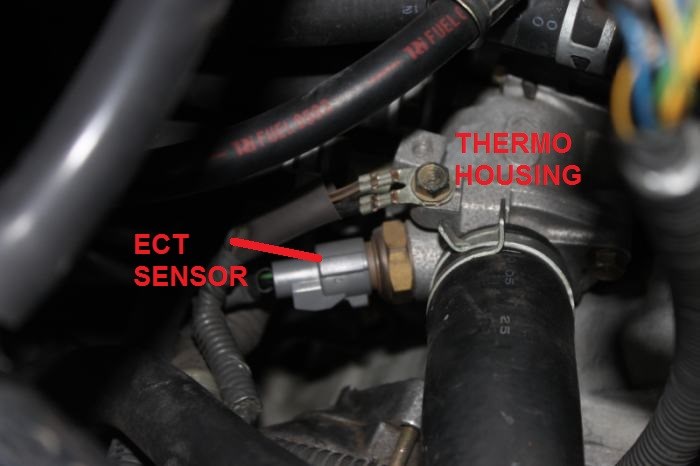
The Engine Coolant Temperature Sensor ( ECT ) monitors the engine coolant temperature, whose resistance value decreases as the coolant temperature increases. The engine coolant temperature sensor signal is used to determine the amount of fuel necessary to provide good cold engine performance. In addition to fuel calculations, the engine coolant temperature signal plays an essential role in nearly every function the electronic control unit handles. Where the engine control unit uses the engine coolant temperature information to:
1- Calculate the basic injection duration.
2- Ignition timing.
3- CVVT variable valve timing .
4- Control the speed of the gearbox.
5- Control the cooling fan.
This sensor is usually located near the water outlet on the cylinder head.
If the engine coolant temperature sensor does not work properly, the following symptoms may appear:
1- Poor engine performance.
2- Engine overheating.
3- Poor starting capacity.
4- High fuel consumption.
5- Increase in carbon monoxide and hydrocarbon emissions.
In addition to the engine coolant temperature, the intake air temperature is used to detect the cold start condition by comparing the engine coolant temperature signals and the intake air temperature. If they are within 8 °C relative to each other, the ECM assumes a cold start.
The sensor has three terminals:
1- Ground terminal.
2- Electricity terminal (5 volts).
3- Signal party.
The sensor performance is detected using a fault diagnosis device, and if no malfunction appears in the fault list, its performance is detected .
Important note:
The temperature of the coolant remains on the rise until the temperature reaches about 96 to 98 degrees Celsius, then the cooling fan operates automatically and the liquid is cooled until it reaches about 82 degrees Celsius, then the fan stops working until the temperature of the coolant rises Again the fan is working when the temperature reaches 98°C again and so on.
Through the fault diagnosis device, the temperature and the operation of the cooling fan are observed in the aforementioned cases to determine the cause of the engine overheating. Is it sensitive that the fan is?
There are no reviews yet. Be the first one to write one.