
Principles of engine operation First
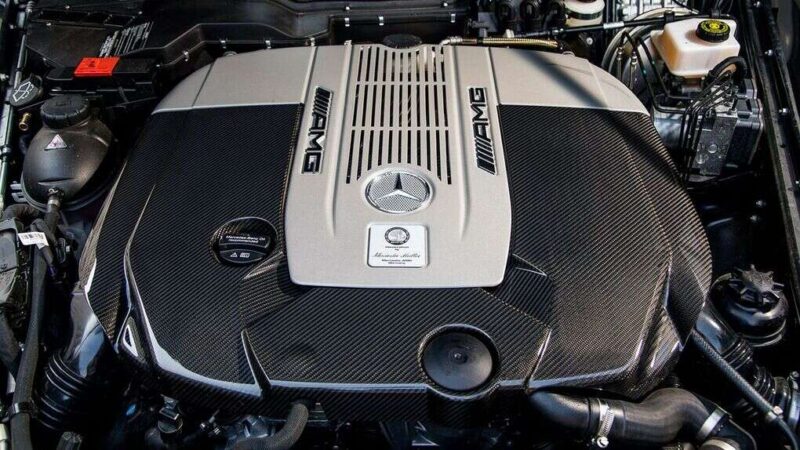
we must know that there is a common mistake in naming the car engine with the car motor, which is a scientifically wrong designation because the word “motor” refers to the electric motor because the car engine’s job is to move the car in the end through some of the processes that are carried out from the transmission of movement from the engine to machines Traction transmission by car.
The function of the engine ( Engine , ):
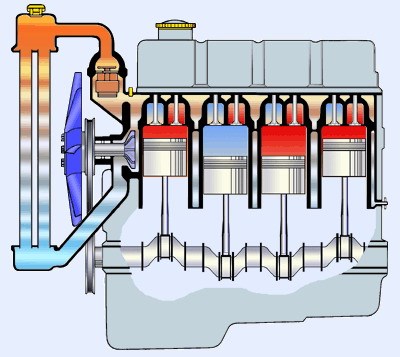
the car engine is internal combustion engine ( : Internal Combustion Engine , ) which converts chemical energy contained in fuel (gasoline or diesel) into thermal energy, then this thermal energy into mechanical energy can be utilized.
WIM accomplished by mixing appropriate amounts of air ( Air ) and fuel ( Fuel ) and burning mixture ( the Mixture) inside a tight cylinder and the expanding gases as a result of combustion push the piston to the bottom of the cylinder and operate at a controlled rate.
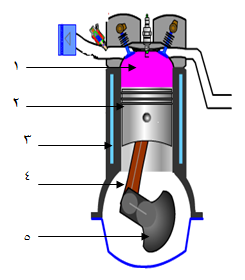
The moving piston inside the cylinder is connected to the connecting rod (the bell) from above and below the crankshaft (the crankshaft), and the pressure of the expanding gases as a result of the combustion of fuel inside the cylinder pushes the piston down. The reciprocating movement of the piston is converted into a rotational movement of the crankshaft, which gives the necessary power to move the car, and this is thermal energy that is converted into mechanical energy.
- Air/fuel mixtureAir / Fuel Mixture
- piston Piston
- roller Cylinder
- connecting arm Connecting Rod
- crankshaft Crankshaft
The car’s engine operates on a four-stroke thermal cycle system.
Thermal four-stroke cycle : ( 4-Stroke Cycle Engine )
The cycle of a four-stroke engine takes place in two turns of the crankshaft, and each cycle consists of four different strokes as follows.
1- Suction Stroke
2- Compression Stroke
3- Power Stroke or Expansion Stroke
4- Exhaust Stroke
Definition of half ( the Stroke ) :
isdistance fromtoppiston Athrkha placed incylinder (n. M. P) (ieupper dead point) to put less incylinder (n. M. O) any (dead point Lower) vice versa.
The upper dead point Top Dead Center (TDC)
dead point bottom Bottom , Dead Center ( a BDC)
1- run clouds :
The intake valve ( Intake Vale ) is open and the exhaust valve ( Exhaust Valve ) is closed, and the piston moves from the upper dead point (NPM) to the lower dead point (NPM) and the pressure at the top of the piston is caused by its rapid downward movement , less than atmospheric pressure and due to this low pressure, the mixture of fuel and air flows in the cylinder in front of the piston through the intake manifold.
2- Compression stroke :

At the end of the intake stroke, the piston begins to move from the lower dead point (NPM) to the upper dead point (NPM). In the meantime, the intake valve is closed while the exhaust valve remains closed, and the air and fuel charge is compressed in the cylinder.
3- Power stroke ( power – effective – ignition)
Shortly before the piston reaches the upper dead point (NPM), a spark occurs from the spark plug, and the combustion of the compressed charge inside the cylinder begins. This is followed by the expansion of the combustion gases and the resulting pressure pushes the piston in the direction of the lower dead point (N.m. S) and the intake and exhaust valves are closed during this stroke.
4- Exhaust stroke:
The piston moves up from the lower dead point (N.M.S) towards the upper dead point (N.M.S). In the meantime, the exhaust valve opens, while the intake valve remains closed, and the combustion products rush from the cylinder and the combustion chamber to the exhaust manifold and then to the atmospheric air.
Note: The
power stroke is the effective stroke, that is, it is the stroke that we obtain from the required mechanical movement, through which the car is finally moved through some operations that are carried out from the transmission of movement from the engine to the traction transmission machines in the car.
There are no reviews yet. Be the first one to write one.